|
MrTinned Report
| Issue 19 |
Saturday, 19 September 2026 |
Weekly |
Forwarded by a friend? The weekly report is free. Get your own → |
|
|
The Open
|
Cut
one tuna, four markets
|
A tuna comes off the hook whole, and the boat is paid the same price per pound whether that particular fish yields mostly loin or mostly waste. By the time it leaves the cutting table, the one animal has become four completely different products, priced as though they came from four different oceans. There is the loin, sold by the case. The strip of fat under the belly, sold by the tin. Two small flaps of muscle behind the jaw, sold by the piece. And a pair of yellow sacs, no bigger than a fist, sold by the gram. Same hook, one fish, four markets. What sets the price is never the species and rarely even freshness. It is geometry: how much of a given cut exists on one animal, and how many hands it takes to get it out of the fish in one piece. The loin is the baseline because it is, in the plainest sense, the fish. It is one long, continuous muscle running the length of the body, firm enough to be sliced by a machine without falling apart, and there is a great deal of it on every animal that comes aboard. This is the cut that fills the everyday tin of bonito del norte from Ondarroa and Bermeo, caught the same hook-and-line way as everything else in the costera del bonito, and it is priced the way abundance always gets priced: by the case, by the pound, cheap because there was never a reason for it to be anything else. The belly is where the arithmetic starts to change, and this newsletter already told that story in full back in Issue 10: a thin, fatty strip too soft for any machine to handle, hand-packed one piece at a time. Ventresca earns its price by being scarce and fragile in exactly the way the loin is abundant and forgiving. The short version, for any new readers since then: fat is where the flavor lives, fat is also the first thing to spoil, and Cantabrian canneries worked out how to stop the spoilage clock eighty years before refrigeration. Go further still and the cut all but disappears. Tuna cheek, hohoniku in the Japanese trade that prizes it most, is a small flap of muscle worked constantly by the jaw, which gives it a texture unlike anything else on the fish: firm at the bite, tender underneath, closer to a cut of meat than to a flake of fish. Every animal, whatever the species, carries exactly two of them, tucked behind the eye where a typical processing line never looks for it. A large tuna can run to hundreds of pounds of loin and belly between them. It gives up about half a pound of cheek that’s split into two pieces. Getting to them means stopping the line to cut them out by hand before the rest of head goes wherever tuna heads go. That is the entire economic argument for why a few ounces of cheek can sell for several times what the loin does, ounce for ounce: not rarer fish, just a smaller and more stubborn piece of the same one. Roe asks a different question of the fish, because it is not really a cut at all. It is an organ, and what happens to it after the fish is opened matters more than where it sat inside the animal. Pressed and boiled the everyday way, in the Cantabrian markets is a modest tapas-bar plate, sliced and eaten cold with little ceremony. Salted, pressed under boards, and hung to dry for weeks the way the tonnara towns of Sicily have done since before the cannery existed at all, the same organ becomes bottarga di tonno: a hard amber slab that gets grated over pasta rather than eaten by the slice, and that can sell for well over ten times what the boiled version does, gram for gram against gram. The tuna never changes. What is done to its roe in the weeks after the fish comes ashore is the entire price. So the loin, the belly, the cheek and the roe were never four different qualities of the same fish. They are four different relationships between an animal and the people who cut it apart: how much of the cut nature gave them, how gently it has to be handled, and how much of their own time they are willing to spend coaxing something valuable, one piece at a time.
|
|
|
|
|
|
The Database
Here is what happened this week.
|
531
NEW PRODUCTS
|
197
RESTOCKED
|
48
PRICE CHANGES
|
|
338
SOLD OUT
|
1
NEW BRANDS
|
29
NEW RETAILERS
|
Figures captured at publication. The market is live and always shifting at mrtinned.com. We brought in twenty-nine new retailers this week. Only one new brand this week. Most of the new retailers came off two retailer-discovery batches and an Asian-grocery cluster. Some of them are nemlig.com, Tinned Fins, skonis.co.uk, BuyPortuguesefood, Thai Snack Online, ThailandBazar and Dagolla Mart. A cleanup pass logged thirty-six product merges and a restock counter that was inflating flips got fixed.
|
|
|
Market Report
From the terminal, September 22, 2026
|
How the week moved
Where the cuts landed: Ventresca tins moved the most, down 31%.
|
Back, longest gone
Selección de panderetas de anchoas de Santoña Out 4 days, Alimentación Diferente Mussels - in Pickle Sauce Out 0 days, The Timeless Tin Limfjord Cockles - in Oil Out 0 days, The Timeless Tin |
New to us
Salmon Stackers Original - 3oz: Farm Raised Honey Smoked Fish Co. Mussels in Pickled Sauce 8/12 (Round Can), 111g Conservas de Cambados Jurel al Natural 425g San José |
|
|
|
The Move

|
Spanish Pig cuts Sardinha's organic olive oil sardines 26.6 percent.
Sardinha is the US label for A Banca de Sardinha, a Portuguese sardine range Mediterran Food & Beverage has run out of Aveiro since 2007. This tin trades the brand's usual olive oil for a certified organic one, steamed and packed the same plain way as the rest of the line, no herbs, no sauce. Eat it straight from the tin over toast, or with nothing more than a squeeze of lemon.
$11.00
$14.99
26.6% OFF
Buy now →Price history and watch →
|
|
|
|
The Tin
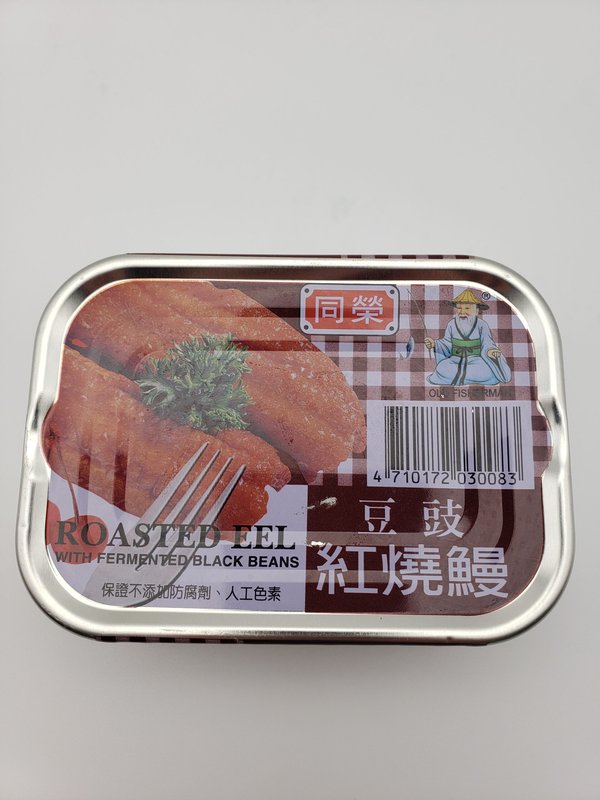
Roasted Eel with Fermented Black Beans
OLD FISHERMAN · TONG YENG · YILAN, TAIWAN · RTG.FISH
The house that helped build "the hometown of canned fish," one more flavor at a time. Issue 9 introduced this brand through its plainest tin, roast conger eel in a sweet chili sauce, a pantry staple rather than a delicacy. Tong Yeng, the firm behind Old Fisherman, has been doing this since 1954, when it started on the docks at Nanfang'ao before moving inland to Dongshan in 1974. It is one of the survivors of Yilan County's mid-century canning boom, a stretch of coast that at its peak accounted for the large majority of Taiwan's entire canned seafood output, mackerel most of all, shipped out to Hong Kong, Southeast Asia, North America and Australia as the industry modernized through the 1960s and 70s. The eel line is what travels best, but it was always one product among the mackerel and tuna cans that actually built the company. This week's tin takes the same conger eel from Issue 9 and dresses it differently: roasted, then finished in a sauce built on fermented black beans rather than chili, a savory, faintly funky counterpart to the sweeter heat of the first tin. The texture is the same soft, almost shredded flesh that makes this eel easy to eat straight from the can, closer to pork floss than to a fillet. Spoon it over hot rice with sliced scallions, the way it is meant to be eaten, or stir it through a bowl of congee for breakfast. $5.00 at RTG.fish. |
What are you opening this week? Tell us → |
|
|
The Deal

|
Caputo's takes 25 percent off ABC+ horse mackerel in ravigote sauce.
ABC+ is the Portuguese house this newsletter first met in Issue 3, doing an improbably good mackerel-in-moqueca. This is the same small horse mackerel, carapau, in a French-derived ravigote: a bright emulsion of capers, pickles, onion and herbs rather than a single sauce, closer to a relish than a broth. Spread it on crusty bread with a sharp cheese, or lay it over greens with a few radishes.
$11.99
$15.99
25% OFF
Buy now →Price history and watch →
|
|
|
|
The Find
A regular there admits an oil bias going in, generally preferring olive oil to anything else, but the scallops won them over regardless: a firm bite and a light smoke that held up even after a squeeze of lime and a dash of chipotle hot sauce partway through the tin. Their verdict lands as a daily driver rather than a special-occasion tin, helped along by the price: three dollars at a local Ralphs. |
|
|
The Radar
A tracked cannery trims its floor.
Bumble Bee Foods is closing its Santa Fe Springs, California processing plant, per a WARN notice filed in August: 197 jobs cut effective November 19, with the remaining staff let go when the site fully closes next spring. It is the second such notice for this facility since late 2025.
South Africa's pilchard season gets cut hard, and this time it is disease, not just scarcity.
The country's fisheries department has capped sardine catches at 25 percent of what remains of the 2026 quota through early October, citing an ongoing pilchard herpesvirus die-off whose full scope is still being assessed. This sharpens the consolidation story out of Oceana and Lucky Star this past August.
Peru clears its anchovy fleet for round two.
Peru's fisheries ministry has lifted a catch-penalty mechanism for anchovy vessels as researchers begin the biomass survey that will set this year's second season quota, the number that ultimately drives fishmeal and canned-fish supply economics.
Sardines keep climbing among UK shoppers.
Seafish, the UK's public seafood body, reports sardine sales up 30 percent over the past year, tied to the "sardinemaxxing" trend circulating on TikTok and Instagram. The Cornish Sardine Management Association and the Marine Stewardship Council are using the moment to point shoppers toward provenance and sustainability labeling rather than the trend itself.
|
|
|
The Close
Next week: the tin that fed the American West, and the salmon run that made it possible.
|
|
|
Was this issue useful?
Yes →
No →
|
|
|
Writing about tinned fish? Our data is quotable with attribution. Reply to this email.
© 2026 MrTinned. All rights reserved.
PO Box 2941, Winnetka, CA 91396, US
|
|