In this issue
The Open
the can itself
|
Tinplate is a sheet of steel, iron in the early days, given a coat of tin to keep it from rusting, and for most of the nineteenth century the world bought it from South Wales. It began in the early 1700s at John Hanbury's ironworks in Pontypool, and by the 1800s Llanelli was the centre of the whole trade, with mills running through the valleys of Carmarthenshire and Glamorgan. In 1883 about three-quarters of everything those mills made was shipped across the Atlantic to the United States, where it was cut and soldered into cans for fruit, meat and fish. America was canning fast: there were 97 canning firms in the country in 1871 and 886 by 1890, and most of them were packing into Welsh sheet.
The sheet could carry a picture too, once Robert Barclay worked out how. Lithography printed from a flat stone, and only onto flat, porous surfaces like paper, so in 1875, in England, Barclay patented a rotary press with an extra cylinder between the two, wrapped in specially treated cardboard, which picked the image up and laid it down on the tin. The cardboard was later swapped for rubber, and offset printing, which went on to print on paper as well, started there, as a way of decorating metal.
Then the United States closed its doors to the Welsh. The McKinley tariff put a duty of 2.2 cents a pound on imported tinplate from the first of July 1891, lifting its protection from about thirty percent to more than seventy, and the export trade to America more or less ended. Welsh works shut or cut their hours, and the tinplaters went where the work had gone. Lewis and David John Thomas left Pantyffynnon for America in 1895, and that same year a Welsh woman named Hattie Williams was in Pittsburgh, training the women at the Monongahela Tin Plate works. The American mills ran on Welsh skill and Welsh machinery, and by 1899 they held nearly ninety percent of their own market.
What came off those mills was still made into cans by hand, a tinsmith cutting, rolling and soldering one at a time, about sixty in a day. The way out came from upstate New York. Max Ams had a locked seam in 1888 that kept the solder on the outside of the can, Charles Ams and Julius Brenzinger went on to crimp the ends into a sealed double seam, and in 1904 the Sanitary Can Company was formed at Fairport to make open-topped cans with the lid rolled on after filling and no solder near the food at all, twenty-five thousand of them in a ten-hour day. That seam still closes every tin: the edge of the lid and the lip of the body hooked into each other and pressed flat, five layers of metal with a thread of sealing compound in the folds. It is also what rides out the cook. In the retort the heat pushes the ends of the can outward, and as it cools the vacuum pulls them back in, which is why every lid carries those pressed rings, to let the metal flex rather than buckle.
Getting back in the tin took longer. The first instructions told you to cut around the top near the edge with a chisel and hammer, and the first patented opener, Ezra Warner's, did not arrive until 1858. Sardine tins got their own answer in 1866, when J. Osterhoudt patented the little key that came with them for most of the next century. Then in 1959 Ermal Fraze, a toolmaker from Dayton, Ohio, went to a picnic, found he had left his opener at home, and had to open his cans on a car bumper. The tab he designed afterwards went to Alcoa, and in 1962 Pittsburgh Brewing tried it out on Iron City beer, in the same city where Hattie Williams had been training tinplate workers sixty-seven years before.
A can today is about ninety-nine and a half percent steel, its tin coat less than one percent of the weight and around a thousandth of a millimetre thick. It is printed by offset, closed by a double seam and opened by a ring, and the sheet underneath has gone back to travelling: the United States now buys most of the tinplate for its cans from abroad, much as it did when Llanelli made it.
Affiliate · Pan y Cebolla
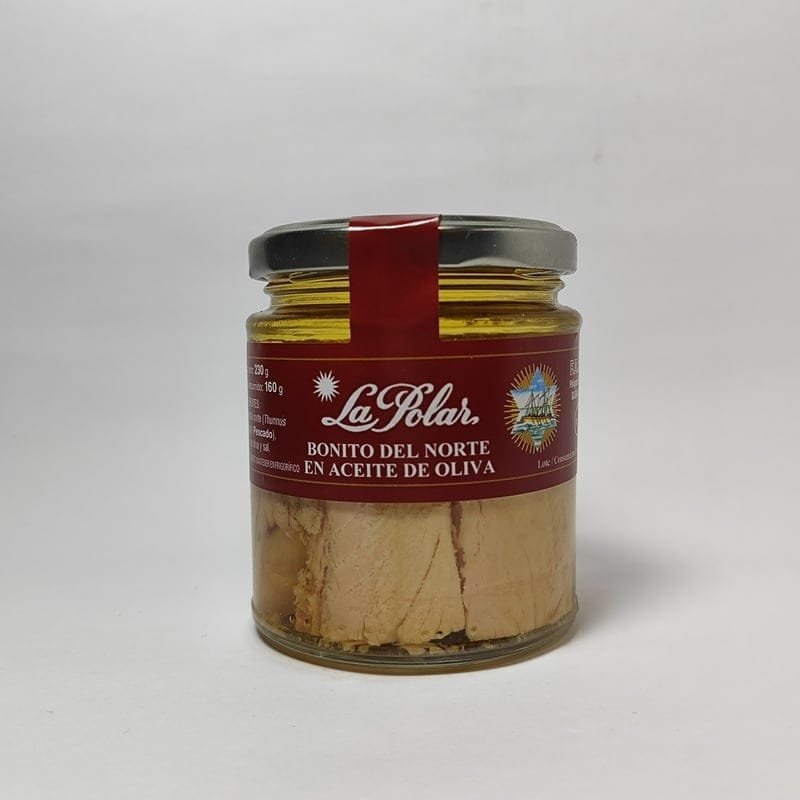
Bonito del Norte en Aceite de Oliva ( Taco ) La Polar
Pan y Cebolla works with more than fifteen artisan dairies across Asturias and keeps over fifty Asturian farmhouse cheeses on the counter, which is the reason most people find the shop on Calle Ámsterdam in Oviedo.
Visit store →The Market Report: the week's real price drops and deals. Free, every Saturday.
The Tin
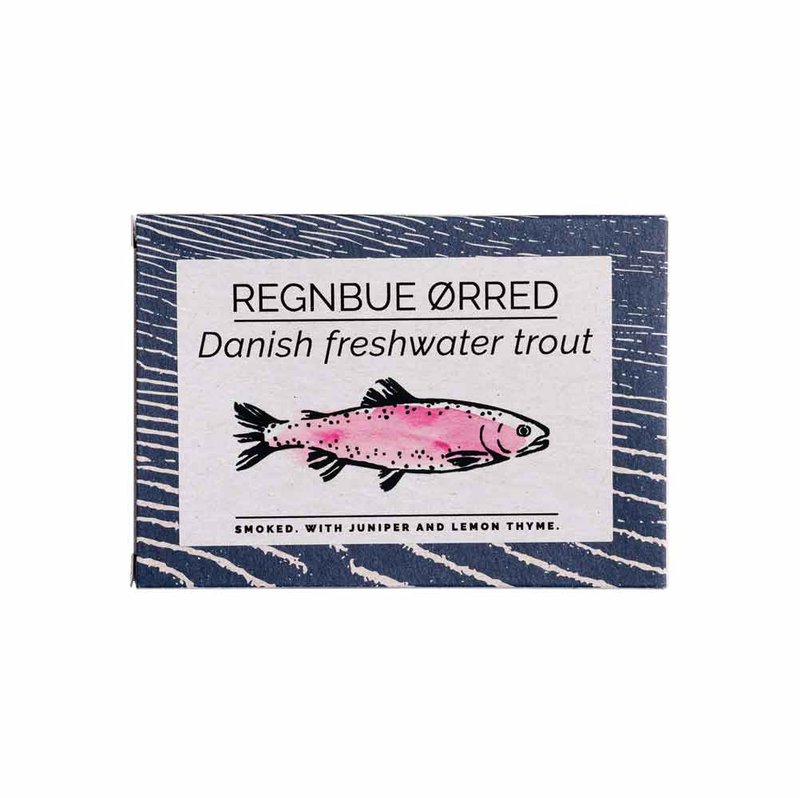
Regnbue Ørred, Smoked Danish Trout with Juniper and Lemon Thyme
In the issue, 3 October
$13.00
Today, 3 October
$13.00Unchanged
A smoked trout that began on the fish farms a co-founder visited as a boy.
Issue 4 met Fangst through its herring. Martin Bregnballe and Rasmus Østerlund Larsen started the Copenhagen house to give Nordic fish the care the Iberian canneries give theirs, and this tin comes from closer to home. When Bregnballe was a boy his father was a biologist working to build up trout farming in Danish fresh water, and the days spent visiting those farms are the memory the tin was made to keep.
Denmark has farmed rainbow trout since around the start of the twentieth century, almost all of it in Jutland, where the streams run strongest, with river water led through the ponds and let back out into the same river. By 1914 there were 140 trout farms in the country, most of them farming for export.
The tin is that fish, Oncorhynchus mykiss, smoked and packed in organic cold-pressed rapeseed oil with lemon thyme and juniper, close to three parts trout to one part oil. The herbs are there in small amounts, half a percent of the tin between them, so the smoke and the trout still lead. Fangst's own advice is good bread and maybe a lemon; it is just as good laid over a warm boiled potato with some of the oil.
$13.00 at Island Creek Oysters, $13.99 at Scandinavian Specialties, $14.00 at Mercado Central NYC, $15.00 at DECANT Napa.
The Radar
Morocco is losing the canned sardine trade to China.
Morocco's share of the world's canned sardine market fell from 29 percent in 2021 to 16 percent in 2025, while China's rose from 18 to 38 percent, Le360 reported on 27 September. More of Morocco's catch is now too small to can: canneries take 17 percent of the country's sardine landings, down from 30.
Scientists say the mackerel catch can double next year.
ICES advised on 30 September that the Northeast Atlantic mackerel catch for 2027 should be no more than 352,938 tonnes, up 102 percent on its advice for 2026, after better recruitment and heavier fish. The coastal states still have to set the actual quota, and their combined catches have run well above the advice for years.
Tinplate duties could reach back to the summer.
Commerce has found critical circumstances in its dumping case on Chinese tin mill products, so the duties can apply to imports made up to ninety days before its 21 September notice. The ITC will hold its final hearing on the case on 4 December.
The Find
“Flavoured sardines vs just evoo”
A newer sardine eater on r/CannedSardines, working through supermarket tins in olive oil, Minerva and Connétable, with shallots, garlic and sometimes lemon, was about to buy from a couple of the better French houses and asked whether a lemon tin is any better than a plain one with a squeeze of lemon. The thread mostly said squeeze your own. One reader found the lemon tins they had tried mild, a slice or so on top, and another found most pre-flavoured tins underwhelming and would rather dress their own. A regular explained why: what is in the can gets cooked, and the cooking softens and blends whatever went in with the fish, so it comes out gentler than it went in. Buy the plain tin, and keep the lemon for the table.
Read on r/CannedSardines →What are you opening this week? Tell us →
The Close
Next week: the shellfish of the Galician sand, raked and dug by hand at low tide, and the tins they end up in.
Was this issue useful?
Writing about tinned fish? Our data is quotable with attribution. Get in touch →