|
MrTinned Report
| Issue 15 |
Saturday, 22 August 2026 |
Weekly |
Forwarded by a friend? The weekly report is free. Get your own → |
|
|
The Open
|
Print
The language of tins
|
Two tins on a shelf, the same word across the front of both, and two different fish inside them. The front of a tin is a name and it is built to be read at arm's length. Everything that separates those two tins is somewhere else on the can, in the smallest type on it, written to a standard, in a language that belongs to the trade rather than to the person standing in the shop. It is worth learning, because nothing is being hidden. The trade is just talking amongst itself. Start with the word, because the law reached the front of the tin first. In Europe, sardines belongs to one animal, Sardina pilchardus, the fish that runs up the Atlantic from Morocco to Biscay, and nothing else may be sold under that word on its own. Twenty-one other species are allowed to borrow it, herrings and sprats and several sardinellas, three anchovies off the Pacific coast of the Americas, and the price of borrowing is that they carry their scientific name and the sea they came out of in the same breath. So when a tin says sardines, Sprattus sprattus, North Atlantic, the Latin is not decoration. It is a sprat, and it has been made to say so. A few tins along, where the shellfish are, the disclosure goes numerical. Somewhere near the weight on a Galician mussel or cockle tin there is a pair of figures, 8/10, or 25/35, and that is simply how many animals are inside. It is the grading system of the Spanish shellfish trade compressed into two digits, because fewer pieces means bigger pieces and bigger pieces cost more. The arithmetic is one division. Drained weight over count gives you the weight of a single mussel, and a Spanish quality order from 1985 does that sum and turns the answer into a word, so over seven and a half grams is grande, over five and a half is mediano, and under that it is pequeño. The strange part is which half a packer owes you. The word is compulsory. The count that lets you check the word is optional, and it tends to get printed by the houses that like the answer. Weight comes in two versions on any tin and only one of them is fish. Net weight is everything sealed inside, fish and oil and sauce together. Drained weight is what is left when the liquid has gone, and it is the number that says what you are actually buying. There is a floor underneath it too, which is more than most people expect of a label: preserved sardines have to be at least seventy percent fish by net weight in oil, brine, water or a marinade, and at least sixty-five percent when the medium is tomato. Somebody sat down and set the minimum quantity of fish permitted in a tin of fish. What a can is excused from is the fish's address. Buy a fresh fillet, or a smoked one, or anchovies packed in salt, and the label owes you the catch area and the class of gear that took them, the FAO zone and the net or the line. Put those same anchovies into a tin of oil and the obligation disappears, because a canned fish and a cured one sit in different chapters of the customs code and only one of those chapters carries the catch area. What survives is the country where the tin was last substantially worked, which is how a Moroccan sardine arrives on a European shelf under a European name, as Issue 12 kept finding. And then there is the oval, the smallest mark on the whole can. Two letters for the country, a number for the building, EC or EU around the edge. That number is the approval issued to one particular establishment, and the register of those approvals is public, so it can be typed into the Commission's own database, which hands back the company and the town where the tin was sealed even when the front of the pack names nobody at all. The lot number a centimetre away does the reverse. It starts with an L, it is left entirely to the packer, who can encode a date or a line or a shift or nothing anybody else could follow, and who is obliged to keep the key rather than share it. One of them is a locked drawer. The other is an open door. None of that info was addressed to you. The count is a fish merchant's grade, the seventy percent is an inspector's threshold, the oval is a licence number, and all of it was printed for somebody else's purposes and then sent out into the world on the side of a tin. Turn one over in the shop and you are reading the fish's own paperwork that will tell you where it has been travelling.
|
|
|
House pick
|
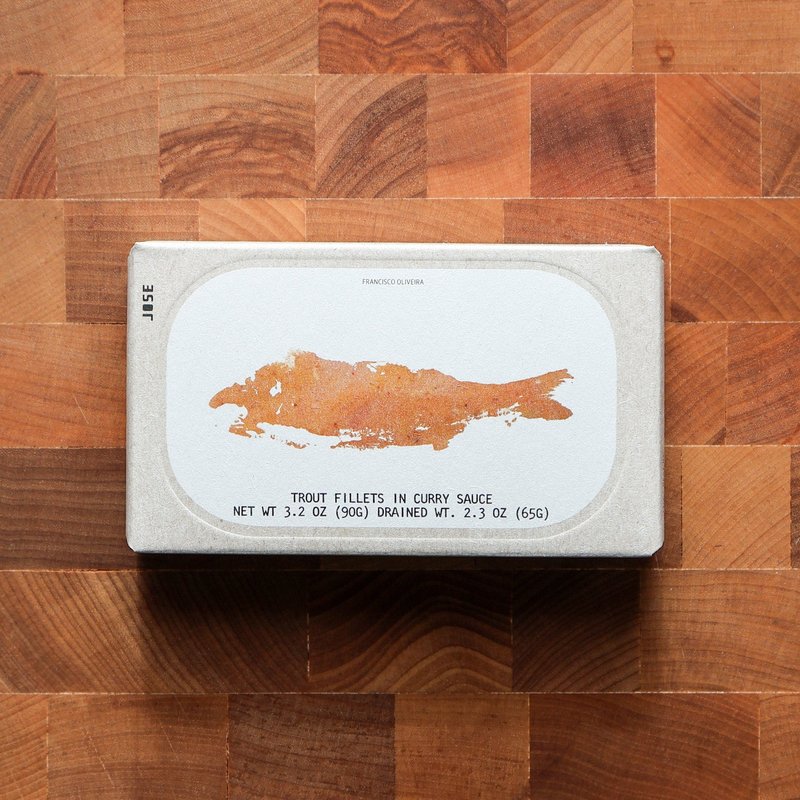
Trout Fillets in Curry Sauce
At FishNook: Every tin tasted and vetted before it earns a spot, from Galician mussels to Danish Fangst.
Visit store →
|
|
|
|
|
The Database
Here is what happened this week.
|
0
NEW PRODUCTS
|
0
RESTOCKED
|
0
PRICE CHANGES
|
|
0
SOLD OUT
|
0
NEW BRANDS
|
0
NEW RETAILERS
|
Figures captured at publication. The market is live and always shifting at mrtinned.com. A British shop came into the tracker this week with thirty-odd tins, Ortiz and Rockfish and Hevva! among them, along with a handful of own-label cans that are waiting on someone to work out who actually packed them. Then fifteen more shops arrived in a single night, most of them European: Spanish, French, Danish, Portuguese, Irish and Swedish. Several hundred tins came with them, and the striking part is how few of the houses are new. It is mostly José Gourmet and Agromar and Porthos and the rest of the familiar names, turning up in shops nobody here had been watching. The catalogue got wider this week rather than deeper. A pass through the site's own written text also corrected forty-odd errors across fish types, regions, brands, retailers and preparations, and nineteen brand descriptions were taken down to nothing.
|
|
|
The Move
|
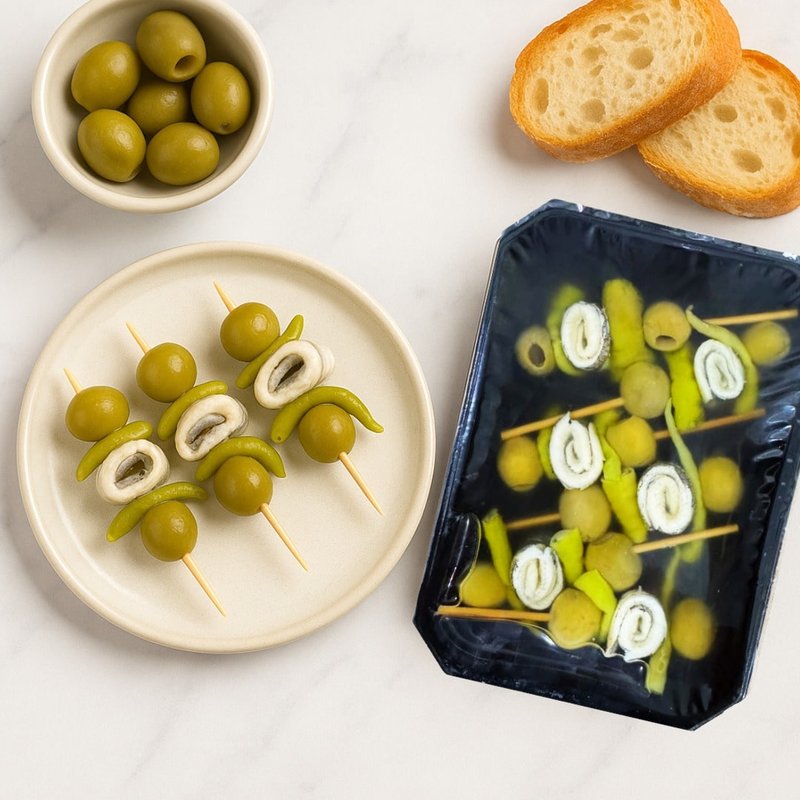
Iberico Taste cuts Conservera Delgado's gildas by 25 percent.
A gilda is three things on a cocktail stick: an olive, a pickled green pepper, and an anchovy. Casa Vallés in San Sebastián has always said one of its regulars speared one of each off the counter in the late forties and named it after the Rita Hayworth film, on the grounds that both were green, salty and a little bit spicy. Conservera Delgado assembles them by hand in Alcalá de Guadaíra outside Seville, about fifteen hundred fish a day through the place, and the fish here is the boquerón, cured white in vinegar rather than brown in salt. The price sat at $19.99 every single reading through Wednesday and has been $14.99 since.
$14.99
$19.99
25% OFF
Buy now →Price history and watch →
|
|
|
|
The Tin
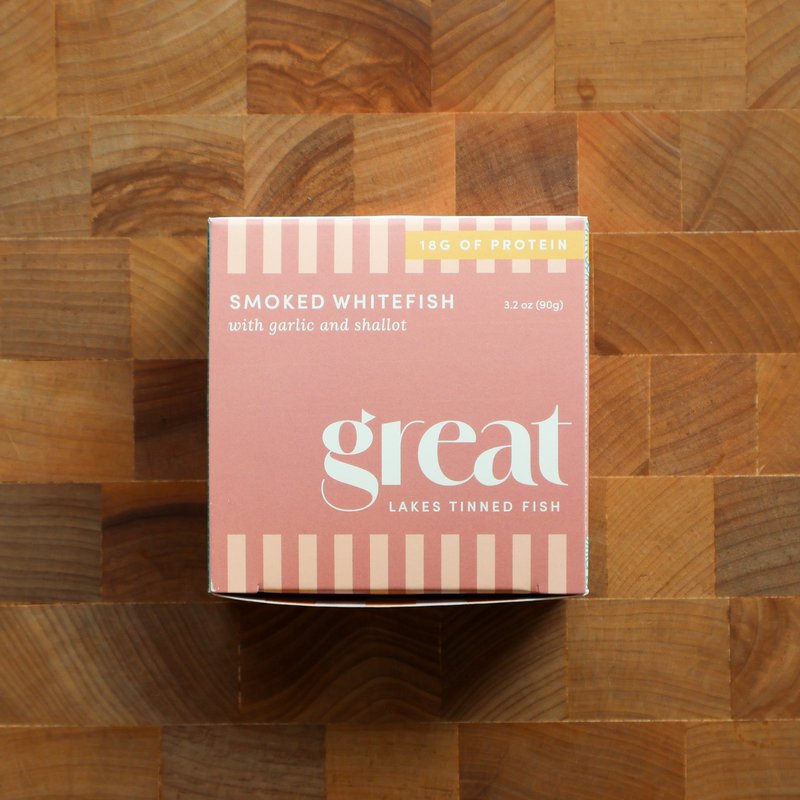
Smoked Whitefish with Garlic and Shallot
GREAT LAKES TINNED FISH · MUNISING, MICHIGAN · FOUR SHOPS
The oldest whitefish boat on Lake Superior, and the tin at the end of it. Issue 8 met this house a year and a half into its life, when Marissa Fellows had moved home from a Boston wine bar to put a Great Lakes fish in a tin because nobody else had. The fish in that first run came out of Lake Erie and was processed in Ontario. It does not any more. The whitefish now comes from VanLandschoot and Sons of Munising, a fifth-generation family fishery that has worked the same water since 1914 and is one of two state-licensed operations left on all of Lake Superior. The family came from Knokke in Belgium in 1906 and started fishing out of Gladstone eight years later, moving up to Munising Bay in 1942. The part worth knowing is what they did in 1965. Expecting gill nets to be banned on the lakes, Jerome VanLandschoot designed a replacement, and he and his son sat and hand-tied thousands of knots to build the prototype, then tested it in AuTrain Bay. That was the trap net, and it is still how the fish in this tin is caught, off Munising Bay and out towards Copper Harbor on the Keweenaw. The fish is cold-smoked rather than hot, which keeps it mild and holds it together, and it is packed in organic sunflower oil with sea salt and a garlic and shallot cure. It is a gentler, sweeter, lake-tasting thing than the Atlantic and Mediterranean tins around it. Eat it on toast, or flake it over a boiled potato with some of the oil. $15.99 at FishNook, $18.00 at DECANT Napa, $18.95 at Surfas Online, or $45 for a three-pack direct from Great Lakes. |
What are you opening this week? Tell us → |
|
|
The Deal
|
Eataly takes a quarter off Callipo's tuna-stuffed chillies.
These are the small round chillies of the Calabrian tradition, the ones that grow squat and red and turn out to be only gently hot, hollowed and packed with yellowfin, capers and a little anchovy, then laid in olive oil with bay leaves. The jar is forty-two percent pepper to twenty-three percent tuna filling, so it eats as a vegetable dish with fish in it rather than the other way round. Callipo, the Calabrian house from Issue 13's Deal, sells it as part of its own km-zero line. Eataly has it at $16.49 from $21.99, flagged on the page. Put them on bread, whole, with a little of the oil.
$16.49
$21.99
25% OFF
Buy now →Price history and watch →
|
|
|
|
The Find
“Ferrigno La Bonne Mer Salmon in Extra Virgin Olive Oil”
A poster on r/CannedSardines this week did the thing the essay is about, and did it for fun. New packaging had turned up on a French salmon tin, replacing what used to be labelled Saumon Sauvage, and rather than take the front at its word they read the rest of it. The catch area was given quietly as the Northeast Pacific. The words wild caught, which half the aisle shouts, were nowhere on a tin that had every right to shout them. And the species was there in Latin, Oncorhynchus keta, which is chum, the least fashionable of the Pacific salmon. None of that was hidden and none of it was advertised. It was just in the places where a tin writes things down, for anybody who turned it over.
Read the thread →
|
|
|
The Radar
Peru calls the season off.
Peru ended its north-central anchovy season early on 20 August, blaming warm coastal water and too many juveniles in the nets, and with it went any hope of the fishery reopening later in 2026. This is the largest single fishery in the world, and the season had already opened with a catch limit thirty-six percent below last year's. Almost all of that anchoveta becomes fishmeal rather than tins, so the effect on the shelf is indirect, but it is the second big pelagic squeeze running at once alongside the Iberian sardine.
Skipjack keeps climbing.
Skipjack prices rose again in Bangkok and Manta through the third week of August, with the smaller canneries paying up while the large packers sit it out. The Pacific closure that was meant to reset the market lifted on 15 August and prices carried on regardless. This is the commodity end of the trade rather than the conservas end, so it lands on supermarket tuna first.
Spain may not be finished after all.
Spain closed its sardine fishery on 1 August with the quota exhausted, and that closure is now under review: catches recorded through the end of August are being reassessed under the Iberian optimisation mechanism, and if a surplus turns up, boats that have used their own allocation could be let back out from a common reserve. A partial September reopening is on the table.
|
|
|
The Close
Next week: one stretch of coast that decided what the best tin in the world tastes like, and a curing method that takes the better part of a year.
|
|
|
Was this issue useful?
Yes →
No →
|
|
|
Writing about tinned fish? Our data is quotable with attribution. Reply to this email.
© 2026 MrTinned. All rights reserved.
PO Box 2941, Winnetka, CA 91396, US
|
|