|
MrTinned Report
| Issue 16 |
Saturday, 29 August 2026 |
Weekly |
Forwarded by a friend? The weekly report is free. Get your own → |
|
|
The Open
|
Cantábrico
one coast, two catches
|
Bermeo sits in Bizkaia, in the Basque Country, and Santoña sits sixty-some miles west in Cantabria, a completely different region with its own government, its own dialect of Spanish, its own idea of itself. What they do share is one uninterrupted stretch of the Cantabrian Sea. A morning's drive apart at most, this one run of coast produces two of the most sought after tins in the world: an anchovy cured for the better part of a year, and a tuna caught the slow way, one hook at a time, in a summer campaign that hands its catch to a tin within months. Neither industry looks anything like the other, and both come out of the same water and for the same reason. Start with Bermeo, the town was founded in 1236 around a natural harbour, and within two centuries its boats were already going after something almost nobody else on the coast would touch: the North Atlantic right whale, migrating close enough to shore to be hunted from open boats with hand harpoons. By the seventeenth and eighteenth centuries, Bermeo's whaling had become the town's golden age, its ships ranging as far as Newfoundland to keep the trade running once the local whales thinned out. The coat of arms still shows a ship in pursuit of a whale. Bermeo remains the most important fishing port in the whole Basque Country today, the boats no longer chase whales, but the willingness to go further than the fish require is the same one that built the town. That willingness was never only Bermeo's. In 1534, records show fifteen ships from Gipuzkoa working the Irish fishery, a fifth of the entire fleet. Standing alongside them were Biscayan vessels out of Ondarroa, Lekeitio and Bermeo doing the same. This is the detail worth knowing: fishermen from three small towns on one short coast were working two different foreign coastlines for cod and whale before Spain had canned a single fish. Ondarroa, the largest of the three today, still carries the instinct forward in the fish it built its name on. Last year the Basque fleet, most of it working out of Ondarroa, landed 7,100 tonnes of bonito del norte by early August alone, sixty percent of the entire Spanish catch, every one of them still taken the old way, one baited hook at a time, in the summer campaign the coast calls the costera del bonito. The scale has changed. The method to get there did not. Sixty miles along the coast in the other direction, in a different region entirely, Santoña does not chase anything. It simply waits. More than forty canneries work inside one small Cantabrian town, nearly all of them turning the same modest fish, the Bay of Biscay anchovy, into the tin regarded as the finest version of it anywhere. What happens to that anchovy after the boat brings it in takes the better part of a year: buried in salt, left to break itself down and rebuild into something else entirely, filleted only once it is ready, never before. Santoña never went further out to sea than anyone else. It just refused to rush what came back. Put the two towns side by side and the map stops looking like an accident. Ondarroa's bonito is caught at the edge of what a rod and line can reach, in a campaign that lasts weeks and produces a tin within the year. Santoña's anchovy is caught close to shore, in a season that lasts days, and spends most of a year becoming what it is before it ever sees a tin at all. One town solved the problem of distance, the other solved the problem of time. Between them, on one stretch of coast that never agreed on a language or a government, they quietly decided what two completely different kinds of patience taste like. That is the thing worth carrying out of a shop the next time a Basque bonito and a Cantabrian anchovy sit on the same shelf. Neither tin got there by accident, and neither got there quickly. One coast simply found two different ways to refuse the easy version.
|
|
|
House pick
|
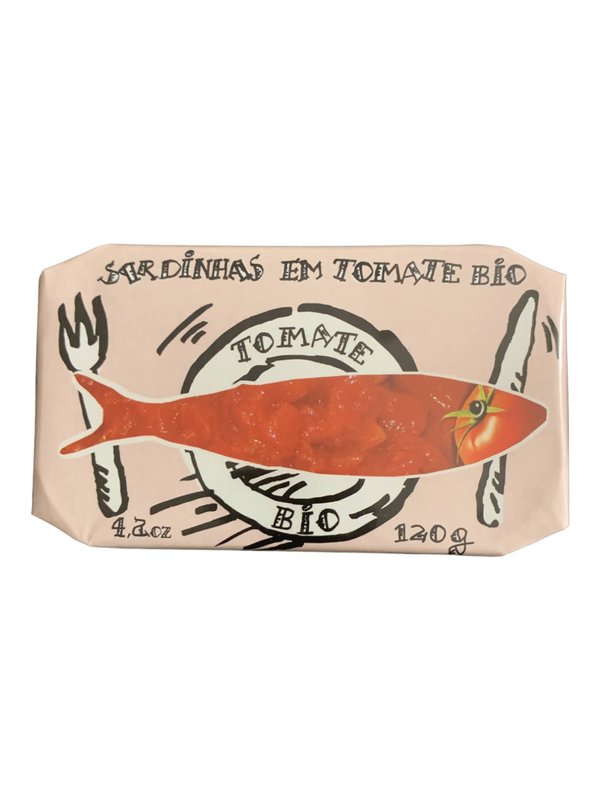
Creative Sardines in Organic Tomato Sauce
At TinCanFish: Portuguese-focused, with a rotating Catch of the Month box and brands sold nowhere else in the US.
Visit store →
|
|
|
|
|
The Database
Here is what happened this week.
|
667
NEW PRODUCTS
|
186
RESTOCKED
|
377
PRICE CHANGES
|
|
205
SOLD OUT
|
6
NEW BRANDS
|
45
NEW RETAILERS
|
Figures captured at publication. The market is live and always shifting at mrtinned.com. Forty-five new retailers arrived this week, more than any week, and three of them are names most American readers will recognise: Target, The Fresh Market, and the Seattle specialty grocer DeLaurenti, around four hundred new listings between them. A bug that had been silently leaving new retailers marked inactive was found twice in the week before it was finally fixed.
|
|
|
The Move
|
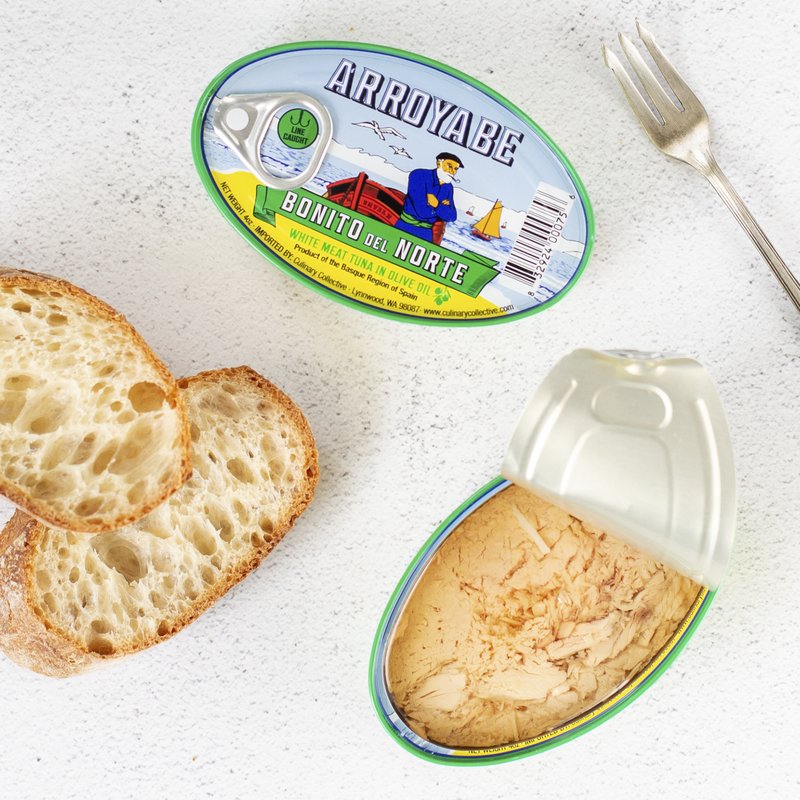
La Tienda cuts Arroyabe's bonito del norte 50 percent.
Arroyabe is a Basque house that still line-catches its bonito del norte by hand, one fish at a time, the method that keeps the flesh from bruising the way net-caught tuna does. Bonito del norte is what Spaniards consider the finest tuna there is, pale and delicate next to ordinary canned tuna. La Tienda has the 4-ounce tins at two for $29.00, $14.50 a tin against the $29.00 a tin they sold for before. On toast, a salad, or stuffed into a piquillo pepper.
$29.00
Two tins
Buy now →Price history and watch →
|
|
|
|
The Tin
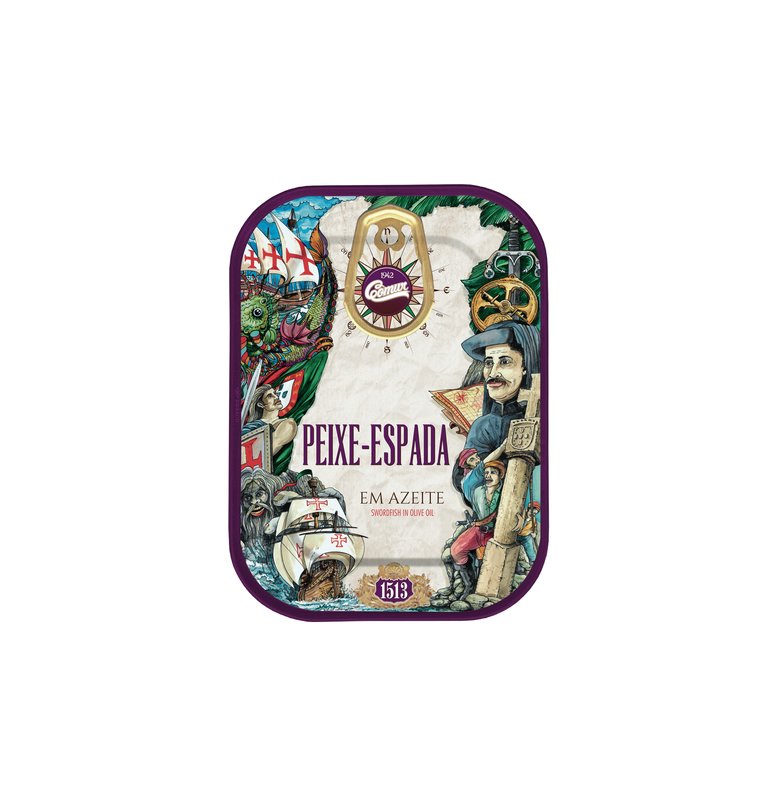
Cutlassfish in Extra Virgin Olive Oil
COMUR · MURTOSA, PORTUGAL · THE FANTASTIC WORLD OF THE PORTUGUESE SARDINE
A fish that lives a kilometre down, canned in a town built on eel. In 1942 the fritadeiras da Murtosa, the eel-frying women who worked the shallow Ria de Aveiro lagoon, had grown their trade past what a kitchen could hold and joined with a handful of businessmen from neighbouring Estarreja to build a proper cannery. Eel, fried and packed in escabeche, was the reason the house existed at all. So central to Murtosa's economy that during the Second World War its preserved eel became one of the town's first real export contracts, feeding Mussolini's troops. Eighty-some years on, Comur makes more than thirty different tins, and while sardines now sell in the greater numbers, eel is still the thing the house is known for. This week's tin is neither. It is peixe-espada, the black scabbardfish, and it comes from nowhere near the lagoon that built the company. Off Madeira, roughly a thousand kilometres south of Murtosa, fishermen out of Camara de Lobos still set longlines eight hundred to thirteen hundred metres down, baited with squid, to reach a fish that never comes up any shallower. What they haul up looks almost nothing like a fish at all: a long black ribbon of an animal that the island turned into one of its defining dishes, fried in strips and served, famously, with banana. Comur steams it instead, and packs the fillets, soft and white under that black skin, in extra virgin olive oil with nothing else but salt. A 120 gram tin holds 80 grams of fish once drained, mild and firm rather than oily. Warm it through and lay it over rice, or, if you want the version Madeira actually eats it, alongside a few slices of banana. $27.00 at The Fantastic World of the Portuguese Sardine. |
What are you opening this week? Tell us → |
|
|
The Deal
|
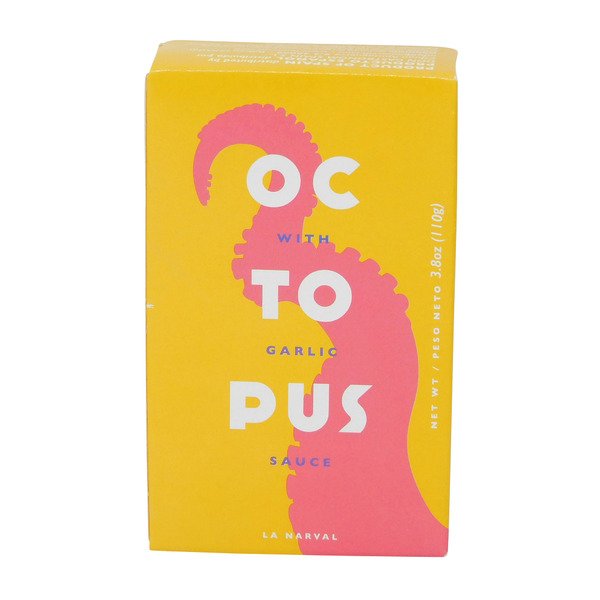
The Fresh Market takes 15 percent off La Narval's octopus.
La Narval has packed seafood out of Cambados, in the Galician ria country since 1966, three generations running. The octopus is caught one at a time in baited traps under a strict quota, then hand-cut and hand-packed, only the best of each animal going into the tin. This one comes in a garlic sauce, marked down to $15.69 from $18.39. Straight from the tin, or warmed briefly with boiled potatoes, the way Galicia serves it fresh.
$15.69
$18.39
15% OFF
Buy now →Price history and watch →
|
|
|
|
The Find
“TIL not all sardines are... sardines”
A poster on r/CannedSardines bought two dozen cans of a supermarket's own-brand sardine on sale, and found it tasted fishier and mushier than what they usually buy. Checking the label turned up why: it was Clupea harengus, herring, not Sardina, and 'sardine' turned out to be a catch-all name rather than one specific fish. Nobody told them this. They read it off their own shelf.
Read the thread →
|
|
|
The Radar
Four squeezes, one season.
The Iberian sardine fishery closed August 1st on an exhausted quota. Peru cancelled its north-central anchovy season outright on August 20th due to coastal warming and too many juveniles in the nets. The Northeast Atlantic mackerel cut lands at 48 percent this year. And now South Africa: Oceana Group has folded its Amawandle pelagic plant into Lucky Star's St Helena Bay site, busing the workers over, calling it a temporary consolidation "until sufficient fish stock can be procured" rather than a closure. Four different fisheries, four different oceans, on the same season. Neither Lucky Star nor Glenryck has a single product in our own catalogue yet, so there is no price to point to here. Peru's anchovy goes mostly to fishmeal rather than tins so that pressure is indirect. This is a pattern worth watching, not yet a shelf event.
Ottawa blinks.
Canada listed roughly 700 US goods for a 25 percent retaliatory tariff effective September 8th with seafood named explicitly, then pulled seafood back off that list within 48 hours after its own processors objected. Net exposure: zero. The whipsaw itself, tinned fish sitting on an active retaliation list for two days before being taken back off it is the story.
Fishwife goes to Aldi.
Two Fishwife tuna tins, Spanish Lemon and Spicy Olive Oil, landed in Aldi stores nationwide on August 26th as a limited run at $6.99, a sharp cut from the roughly $11 the brand charges through its usual grocers. It is the second new placement for the brand in three weeks, after a Sweetgreen tie-in. Aldi is not a retailer we track, so it will not show up in our own price data unless that changes.
|
|
|
The Close
Next week: a Portuguese house so well known for one tin that people forget it makes anything else, still doing the same steps by hand that it did a century ago.
|
|
|
Was this issue useful?
Yes →
No →
|
|
|
Writing about tinned fish? Our data is quotable with attribution. Reply to this email.
© 2026 MrTinned. All rights reserved.
PO Box 2941, Winnetka, CA 91396, US
|
|