|
MrTinned Report
| Issue 4 |
Saturday, 6 June 2026 |
Weekly |
Forwarded by a friend? The weekly report is free. Get your own → |
|
|
The Open
Silverand Salt.
Everything started with herring. For most of recorded European history the herring was the most important fish in the world, and almost none of that had to do with how it tasted. It had to do with how much of it there was, and how fast it went bad. The North Sea and the Baltic produced herring in numbers that are genuinely hard to picture now, schools that ran for miles and arrived in such a density that medieval chroniclers described the water turning black and then silver when the fish would make a turn. A man could fill an entire boat in one afternoon. Catching this fish was never the problem, keeping it was. A herring begins to spoil within a day of leaving the water, and a fish you cannot keep is a fish you cannot sell beyond the harbor you caught it in. That single problem, how to make an oily fish outlast its own freshness, shaped the economy of an entire region for over three centuries. The answer to the problem was salt, and the people who controlled the answer became very powerful. The Hanseatic League, a merchant network that effectively governed trade across the Baltic and North Sea from the thirteenth century onward, built its fortune on salted herring above any other good. The mechanics were simple and enormously profitable. Salt was mined inland at Lüneburg and then shipped down through Lübeck to the coast. The herring was caught in its brief but furious season, gutted and packed in barrels between layers of that salt, then sealed. A fish that died in mere hours became a barrel of protein that could now cross the length of Europe and arrive completely sound many months later. In a Catholic world that forbade meat on fast days for a large part of the year, preserved fish was not a luxury or an indulgence. It was the major protein the whole map ran on, and herring was the cheapest and most abundant version of it. Then suddenly, the herring left. Sometime in the fifteenth century the schools shifted their spawning grounds westward, drifting out of the Baltic waters the League controlled and toward the coast of Holland. The herring did not give a signal. It simply moved, and the whole trade moved with it, into the hands of Dutch merchants who now sat where the fish arrived. The Hanseatic League, the most powerful commercial force in northern Europe, began a long decline that it never reversed, and the proximate cause was a simple fish had changed where it spawned. An entire balance of power had been resting, the whole time, on the migratory habits of a small silver animal. Hold onto that, because it is the part that matters when you pick up a tin today. Long before Nicolas Appert sealed food in glass, before Peter Durand patented the tin can, before the first sardine was ever packed in Brittany, the complete logic of tinned fish had already been written and proven over centuries. Take the oily fish in the few weeks it runs thick. Stop it before it can turn. Carry it somewhere it could never have swam. The can did not invent any of that. It inherited it, refined it, and put a lid on it. The fish that taught Europe the idea was worth building economies and losing empires over was the herring. Every sardine in olive oil and every mackerel in tomato on every shelf you have ever browsed is a footnote to it.
|
|
|
One to know
|
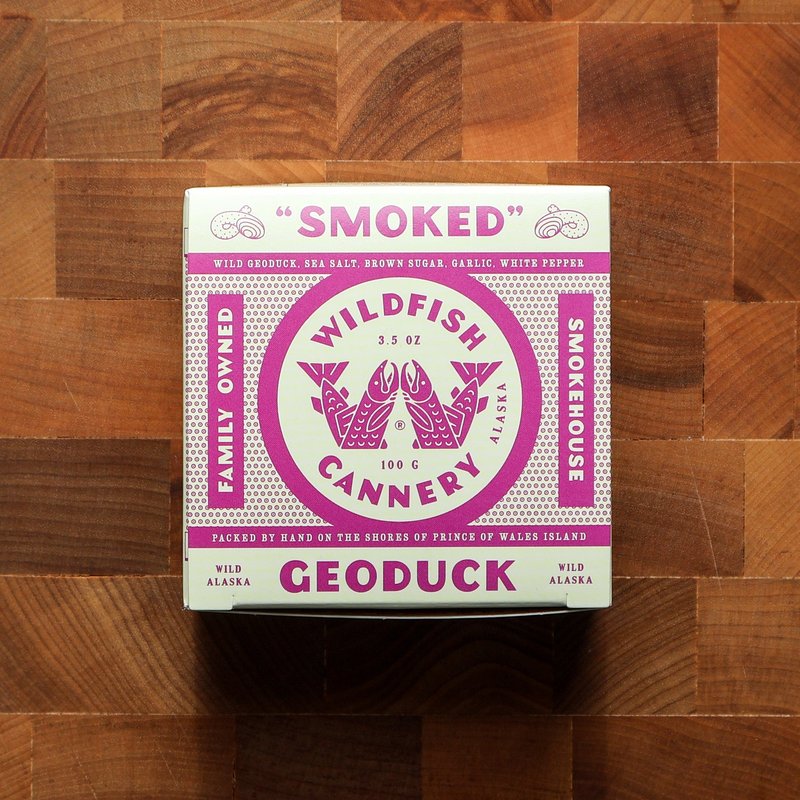
Smoked Geoduck (Limited)
At FishNook: Every tin tasted and vetted before it earns a spot, from Galician mussels to Danish Fangst.
Visit store →
|
|
|
|
|
The Database
Here is what happened this week.
|
82
NEW PRODUCTS
|
35
RESTOCKED
|
20
PRICE CHANGES
|
39 SOLD OUT |
11
NEW BRANDS
|
2
NEW RETAILERS
|
Figures captured at publication. The market is live and always shifting at mrtinned.com. This past week the pipeline ran clean across all six daily dispatch cycles (first time!), and the bulk of the work was in the database itself rather than new ingestion. The regions layer was rebuilt from near-empty: around eighty new region rows were added this week, each grounded and described, spanning the full geography of tinned fish from Galicia, the Algarve, and Matosinhos through Brittany and Normandy, the Italian coast from Liguria to Calabria, the German and Baltic shores, nine prefectures of Japan, and on to British Columbia, Tasmania, the Western Cape, and Kerala. Also, the brands table got a full audit and repair: dozens of empty or thin brand rows were either filled with primary-sourced country, region, and description data or merged into their canonical parent. Importer and HQ rows had their regions correctly nulled, producer brands got catch-first regions, and non-fish brands such as dog treats, olive oil, and caviar were pulled out of the active set. A long-standing species-precision gap was also closed: the fish-type mapper and the enrichment runner were both patched so that specific species are detected from product names and ingredient lists, and generic buckets like "Tuna" or "Salmon" are upgraded in place to the precise species (Yellowfin, Sockeye, Chub Mackerel, and so on) wherever the evidence supports it. Two new sources came online this week as well: Surfas Online, the Los Angeles culinary institution, and Fangst, the Danish smokehouse, now tracked directly.
|
|
|
The Move
A correction first. Last week's Move sent you to Agromar's bonito del norte in cider sauce, and the sharp-eyed among you noticed we had already run that exact tin as a Deal in Issue 1. A repeat is the one thing this section is meant never to do. Our apologies, and to make it right, two Moves this week.
|
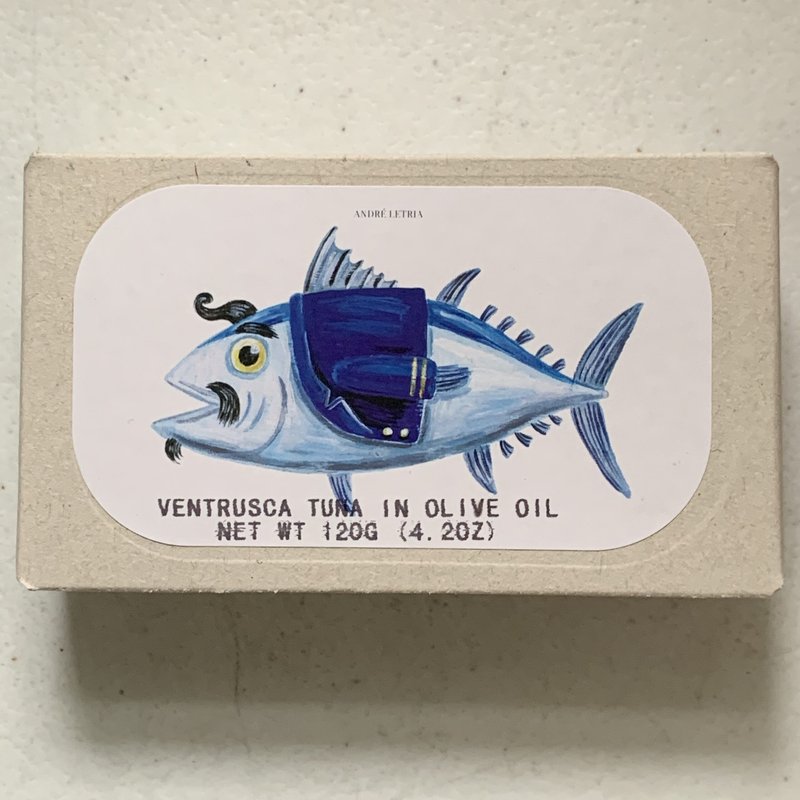
RTG.fish drops José Gourmet ventresca of yellowfin 17%
José Gourmet's ventresca is the belly of the yellowfin, the softest and most marbled cut, from one of the houses that taught the world to take Portuguese tinned fish seriously. It has dropped to $22.00 at RTG.fish from a price that held at $26.50 for two straight months. A cut like this at 17% off does not sit around.
$22.00
$26.50
17% OFF
Buy now →Price history and watch →
|
|
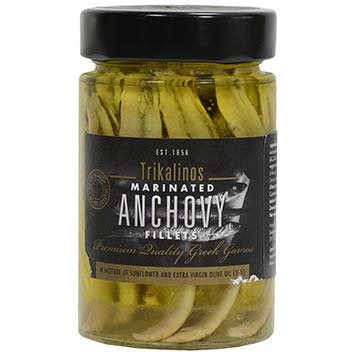
iGourmet takes 15% off Trikalinos marinated anchovies
And from Messolonghi in Greece, Trikalinos has brought its marinated anchovy fillets down to $19.87 from $23.38 at iGourmet, 15% off. This is a family house working wild-caught anchovy the slow way, boned, skinned, marinated rather than salt-cured into oblivion. They are anchovies for people who are sure they do not like anchovies. The drop landed June 2 and has held all week.
$19.87
$23.38
15% OFF
Buy now →
|
|
|
|
The Tin
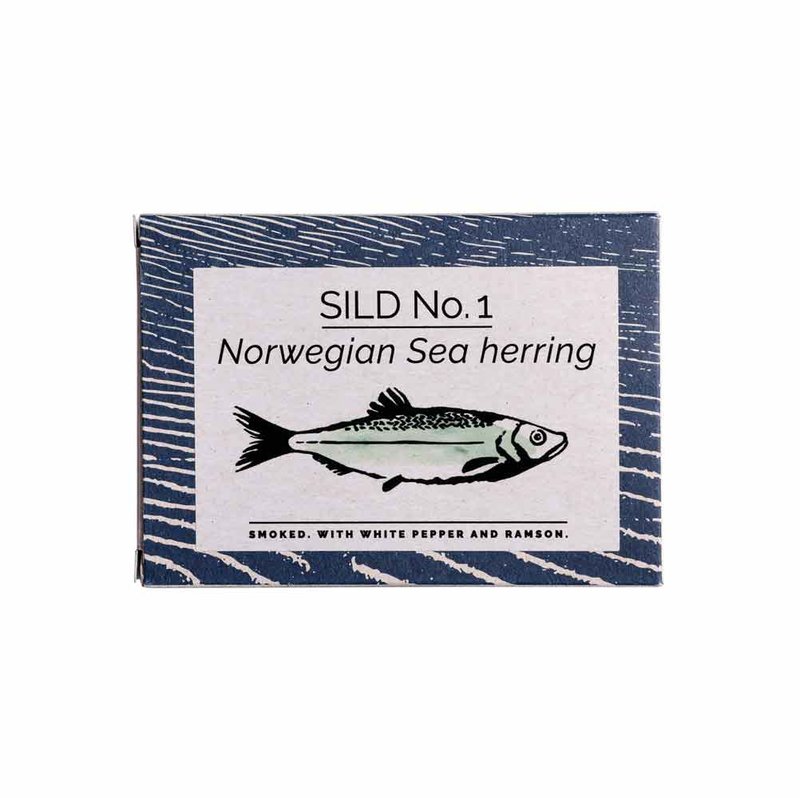
SILD No. 1
FANGST · DENMARK · CAPUTO'S
The herring that wanted to be a conserva. For all the history herring carries, it has rarely been treated as something to savor. It was just the workhorse. The fish you salted by the barrel and shipped by the ton, the protein that fed armies and fast days and the poor. While Spain and Portugal spent the last century turning their sardines and tuna belly into an art form, packing them by hand in good oil and aging them like wine, the herring of the north stayed what it had always been: cheap, salted, functional. That gap is exactly what Fangst set out to close. The Copenhagen brand was started by two founders, Martin and Rasmus, who kept looking south at the Iberian conserva tradition and asking why the Nordic catch, every bit as good, was never given the same care. SILD No. 1 is their answer for herring. The fish is Atlantic herring pulled from the Norwegian Sea, the same waters that have fed Nordic trade since the Middle Ages, smoked lightly over beechwood and packed in cold-pressed rapeseed oil with a spicing of white pepper and ramson, the wild garlic that grows in the northern woodland. The recipes were built with Danish chef and cookbook author Mikkel Karstad. Their aim is a taste of the coast with a hint of the forest, and the people who have eaten it tend to agree it lands right there: tender and flaky rather than dried like jerky, the smoke is present but not dominating, the herbs are supportive rather than loud. It is the rare herring tin that asks to be eaten slowly. Put it on dark rye with a few warm potatoes and a spoon of crème fraîche and it stops being a workhorse fish entirely. After everything the herring has done for Europe, this is what it looks like when someone finally treats it like it matters. $9.99 at Caputo's. |
What are you opening this week? Tell us → |
|
|
The Deal
|
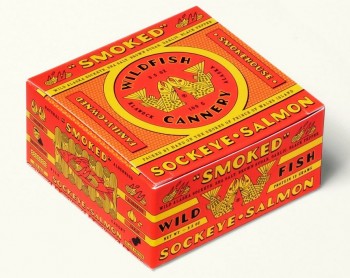
Gourmet Delights has Wildfish smoked sockeye at 25% off
Wildfish Cannery works out of Klawock, Alaska, smoking wild salmon over alder before it ever sees a tin. The sockeye is the one to start with, deep red, firm, the smoke present without burying the fish. It sits right alongside this week's herring: another cold-water swimmer, another northern smokehouse, another fish that earns its keep slowly. A quarter off a tin this good is exactly what the rest of this newsletter exists to catch.
$14.95
$19.95
25% OFF
Buy now →Price history and watch →
|
|
|
|
The Find
"I couldn't find anything about this tin or the brand, so I thought I'd share."
A Toronto Redditor u/mochapj on r/tinnedfish bought a tin of Konserva sardines with jalapeño on pure faith, no reviews, nothing online, and reported back: ten sardines woven into the tin, not a pepper in sight until you lift the fish and find a few spoonfuls hiding underneath. Firm, properly spicy, and one of the better tins they've had in a while. Then the thread got good. A regular confessed to tracking the poster's hauls because they line up with new arrivals at a shop called Good Cheese. Someone took a magnifying glass to the nutrition label, found numbers that could not possibly be right, and concluded nobody at the cannery proofread it. The poster also floated a theory worth chasing: that Konserva might be a quiet co-pack of La Curiosa brand. A blind buy in a Toronto shop, a stranger who knows your grocery schedule, and a typo dissected for sport. Good stuff.
Read the thread →
|
|
|
The Radar
Visit →
|
|
|
The Close
Next week: An older, nearly forgotten habit of canning what swims in rivers and lakes. It is rarer now than it has ever been, and worth knowing before it disappears.
|
|
|
Was this issue useful?
Yes →
No →
|
|
|
Writing about tinned fish? Our data is quotable with attribution. Reply to this email.
© 2026 MrTinned. All rights reserved.
PO Box 2941, Winnetka, CA 91396, US
|
|