MrTinned
MarketPricesDeals
© 2026 MrTinned. Independent. Not affiliated with any retailer or brand.
Privacy Policy·Terms of Use·Report an issue
Prices may contain errors or be out of date.
Spotted something wrong? Let us know → We're always improving.
MarketPricesDeals
MrTinned Report, Issue 5
Why almost nothing freshwater ends up in a tin, a decade-aged trout from the Danube, and a sea-conch worth half its price. ‌ ‌ ‌ ‌ ‌ ‌ ‌ ‌ ‌ ‌
MrTinned Report
Issue 5 Saturday, 13 June 2026 Weekly
The Open
TinningAgainstthe Current.

Stand almost anywhere in a tinned fish aisle and you are looking at the sea. Sardines, anchovies, mackerel, tuna, herring, the occasional octopus or clam. What you will almost never see is a fish that came out of a river or a lake. Trout, perch, pike, carp, whitefish, the fish of fresh water, are nearly absent from the can, and have been for the whole history of the form. It is one of the quiet facts of the category that nobody thinks to ask about, and the reason is more interesting than it first looks.

The easy explanation, the one you sometimes hear, is that freshwater fish are too lean to can, that without the fat of an oily sea fish they turn dry and woolly under the heat of sterilization. That is half true at most. Trout cans beautifully. So do salmon, catfish, smelt, and pike, all of them fish with fat enough to come through the retort completely tender. American home-canning guides list them by name as ideal candidates. The fish that genuinely resist the can are the very lean panfish, the perch and walleye and bass, and those were always going to be eaten fresh anyway. The flesh was never really the problem.

The real reason is geography and scale, and it goes all the way back to where canning was born. The industry grew up on the coast, in Brittany in the 1820s, around the sardine, because the sardine arrived in numbers no river could match. A schooling oily sea fish could be netted by the boatload, landed beside a cannery built for exactly that, and packed by the thousand in a single season. The economics were overwhelming: abundance, proximity, and a fish that would run thick and predictable. Freshwater fish offered none of that. They came from scattered inland waters, in smaller runs, far from any coast where a cannery would sensibly stand. The infrastructure followed the volume, and the volume was always in the sea.

So freshwater canning never became an industry. It became something smaller and more stubborn: a craft that held on where the sea was far and the lakes and rivers were close. The landlocked interiors of Central and Eastern Europe, the Baltic, and the Great Lakes. Where a household's protein swam in fresh water, somebody eventually worked out how to put it in a tin, not because it scaled but because it was what they had.

And it is thinning now, for a reason worth sitting with. Not because the fish is running out. The trout and the whitefish are still there. What has gone is the case for the trouble. A river trout is harder to source at volume than a netted school of sardines, the yield per fish is lower, and the people who grew up eating freshwater fish from a can are aging out faster than they are replaced. The tradition is fading not from scarcity of fish but from scarcity of reason, which is the quietest way for anything to go. You only notice after it is gone.

A few makers still argue, with the product itself, that it was always and still is worth doing. La Truitelle, in the Cathar Pyrenees, cans nothing but organic mountain trout, the first organic-certified tinned fish in France, raised at eleven hundred metres in spring water and packed whole by hand. José Gourmet smokes trout in Portugal. In the United States, Fishwife smokes rainbow trout and Great Lakes Tinned Fish puts up whitefish from the inland seas that named it. And on the Danube in Serbia, one company spent years building a way to can freshwater fish that existed nowhere else in Europe, sealed a single run in 2016, and then discovered what a decade does to it.

Freshwater fish never needed the can the way the sea fish did. That is exactly why the few tins that exist are worth noticing: each one is somebody deciding a fish the industry passed over was worth the trouble anyway. The sea filled the aisle through sheer abundance. Fresh water earns its place there one stubborn maker at a time.
The Database
Here is what happened this week.
0
NEW PRODUCTS
0
RESTOCKED
0
PRICE CHANGES
0
SOLD OUT
0
NEW BRANDS
0
NEW RETAILERS
Figures captured at publication. The market is live and always shifting at mrtinned.com.
The bulk of the work this week went into the database itself rather than new ingestion. The largest piece was a long pass through the Essence vocabulary, where more than a thousand products were reclassified into precise preparations. Flavor profiles that had been hiding inside generic buckets were pulled into their own categories: piri-piri, curry, truffle, salt-cure, Galician sauce, garlic sauce, and the squid-ink en su tinta among them. Normalizing product names from French producers unlocked hundreds of tins in a stroke. Alongside the vocabulary work, the Brittany direct-from-cannery cluster finished coming online, Kerbriant, Conserverie Courtin, La Compagnie Bretonne, and Pointe de Penmarc'h, joined by Minnow and a set of newly tracked Spanish and Portuguese houses, and a batch of merch and gift-set entries that had slipped into the catalog were excluded for good.
The Move
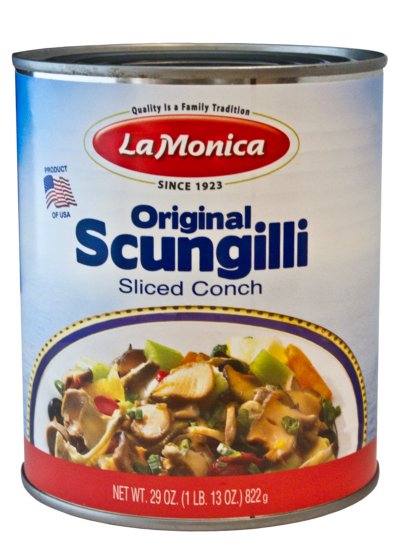
Supermarket Italy cuts La Monica scungilli 37%.
La Monica's sliced scungilli, the firm, mild sea conch that anchors a southern Italian seafood salad, has dropped from $35.99 to $22.79 at Supermarket Italy. Scungilli is a cook's tin more than a snacking one. Drain it, dress it with good oil, lemon, garlic, parsley and a little chili, and you have a cold seafood salad that holds up at any table, any time of year. Simple, and reliably good. At this price the 29-ounce tin is worth the experiment.
$22.79
$35.99
37% OFF
Buy now →
{{MOVE2_HEADLINE}}
{{MOVE2_HEADLINE}}
{{MOVE2_BODY}}
{{MOVE2_NOW}}
{{MOVE2_WAS}}
{{MOVE2_PCT}}
Buy now →
The Tin
Last Catch 2016
Last Catch 2016
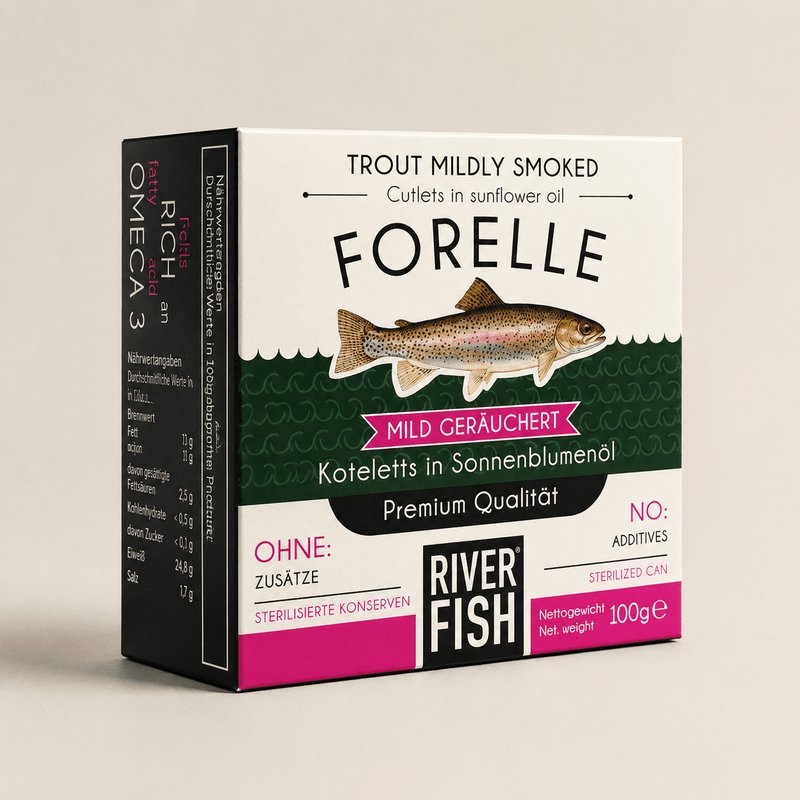
LAST CATCH 2016 · RIVER FISH · SERBIA · LAST CATCH

The trout, ten years on.

A single can of lightly smoked rainbow trout, laid in sunflower oil, sealed in 2016 on the Serbian Danube and left to age for a decade before sale. The fish is mild and tender, the smoke gentle, the oil softened and deepened by ten years in the tin. It is the rare freshwater fish that was canned to be kept, and improved for the keeping.

We told the full story back in Issue 2, the vintaging issue: River Fish, the freshwater cannery in Serbia, the single experimental run, the few thousand cans left after the company closed. The AllTinned aging tinned fish guide covers what ages in a tin and why. This is not an everyday tin. It is the one you open slowly, once or twice.

Also available as a three-can gift set (€129) and a twelve-pack (€480).

€45 at Last Catch.

Buy now → Affiliated
What are you opening this week? Tell us →
The Deal
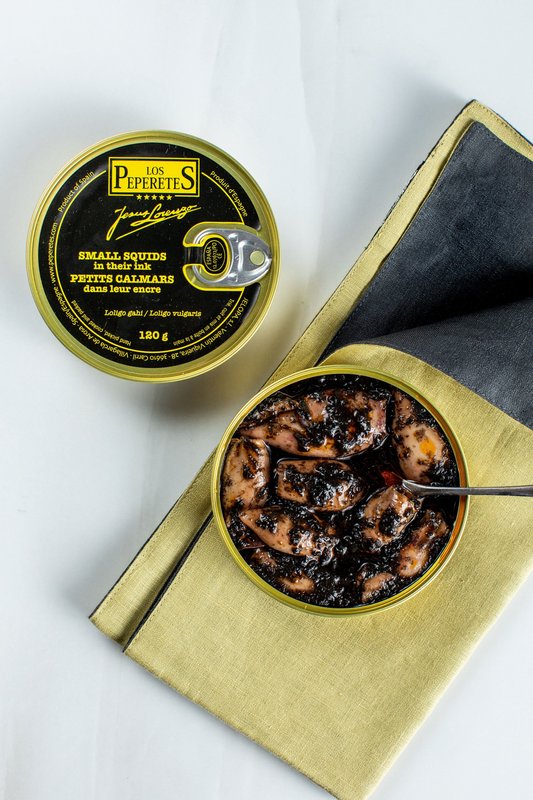
Spanish Pig has Los Peperetes squid in ink at half price.
Los Peperetes works out of Galicia, and its small squid in their own ink are the sort of tin people buy as a small luxury and ration. Spanish Pig has them at $12, down from $24, a true 50 percent cut. These are tender, cooked and sealed in their black ink, a finished dish waiting for a base: spoon them over white rice, or set them on toast and let the ink do the work. At half off, worth keeping a couple around.
$12.00
$24.00
50% OFF
Buy now →
The Find
“Some canned herring fillet fish cakes served with a mustard sauce and salted potatoes (recipe inside)”
A good one on r/CannedSardines this week. Someone took tinned herring fillets and turned them into fish cakes, served with a mustard sauce and salted potatoes. It is a reminder that tinned fish does not stop at the tin: a couple of cans, a potato, an egg to bind, and you have a plate of food rather than a snack. A fitting follow-on from last week's herring issue, and a small argument that the workhorse fish still earns its keep at the stove. Don't miss the recipe.
Read the thread →
The Radar
Back in reach.
The Tinned Fish Market, the UK shop with the painterly Rockfish-illustrated tins, has resumed shipping to the United States this week. If you have eyed their Cornish mussels or Mount's Bay sardines from the wrong side of the Atlantic, the door is open again.
Visit →
The Close
Next week: the strangest corner of the aisle. A fish that looks, feels, and behaves like nothing else in a tin, plus the one preparation that turns it black.
Was this issue useful?
Yes → No →
This newsletter is new and growing entirely by word of mouth. If you found it useful, forwarding it to a friend or discussing it on Reddit means more than you might think.

~ Alex
MrTinned / AllTinned Unsubscribe · View in browser
© 2026 MrTinned. All rights reserved.
PO Box 2941, Winnetka, CA 91396, US
You are receiving this because you subscribed at alltinned.com or mrtinned.com.