MrTinned
MarketPricesDeals
© 2026 MrTinned. Independent. Not affiliated with any retailer or brand.
Privacy Policy·Terms of Use·Report an issue
Prices may contain errors or be out of date.
Spotted something wrong? Let us know → We're always improving.
MarketPricesDeals
MrTinned Report, Issue 6
O Carballiño's octopus festival, the cephalopod's rise from poor food to prized tin, and a smoked geoduck from the Pacific mud. ‌ ‌ ‌ ‌ ‌ ‌ ‌ ‌ ‌ ‌
MrTinned Report
Issue 6 Saturday, 20 June 2026 Weekly
The Open
Alienof the Aisle

Every August, the town of O Carballiño holds the largest octopus festival in Spain. Diners gather around colossal copper pots while pulpeiras cook through between twenty-five and thirty thousand kilos of octopus across the festival, lifting the tentacles, slicing them onto wooden plates, dressing them with nothing but olive oil, coarse salt, and paprika. It is the totemic dish of the region, polbo á feira, octopus of the fair, served in Galicia for more than five hundred years. And the strange part is that O Carballiño sits eighty kilometres from the sea, in Ourense, the only province in all of Galicia with no coastline at all.

A coastal animal became the signature food of the one corner of Galicia that never touched the coast, and the reason is a small piece of medieval economics. The monastery of Oseira held port rights down on the Rías Baixas, and octopus, dried for preservation, was paid to the monks in kind as rent on those holdings. The people of the inland parishes that belonged to Oseira were the ones who carried the dried octopus up from the coast, prepared it, and sold it at the markets and cattle fairs. The dish is called “of the fair” because the fair, not the harbour, was where most of inland Galicia ever met it. The octopus went where the fresh fish could not, for the same reason the salted herring crossed Europe and the sardine filled the cannery: it could be stopped from spoiling and carried somewhere it could never have swam to.

And for most of its history it carried no prestige at all. In the medieval kitchens of the Crown of Aragon, octopus and squid were filed under poor people's food, thought too tough and hard to digest for refined stomachs, fit for laboring bodies and little else. The elite cookbooks include them almost grudgingly. The cephalopod was the cheap, chewy thing the poor ate because the sea gave it away. Then, within living memory, the whole thing inverted. Tapas bars and sushi counters drove demand up, prices climbed, catches fell in the old strongholds of Spain and Japan, and Galicia now closes its octopus grounds for part of each year to let the animal recover while suppliers turn to imports. The poor man's mollusc became the prize people fly to Galicia to eat.

All of which is sitting, overlooked, in the strangest corner of the tinned fish aisle, and people walk past it for one reason: the cephalopod is the hardest seafood to cook well. Tough and rubbery if you undercook it, tough and rubbery if you overcook it, with a narrow window in between that home kitchens routinely miss. Which is exactly the argument for the tin. Galicia has been canning octopus for over a century and has the timing solved. A good tin hands you tender, properly cooked cephalopod that would take real skill to match at home. This is the rare category where the can is not the compromise. It is the path to the better result.

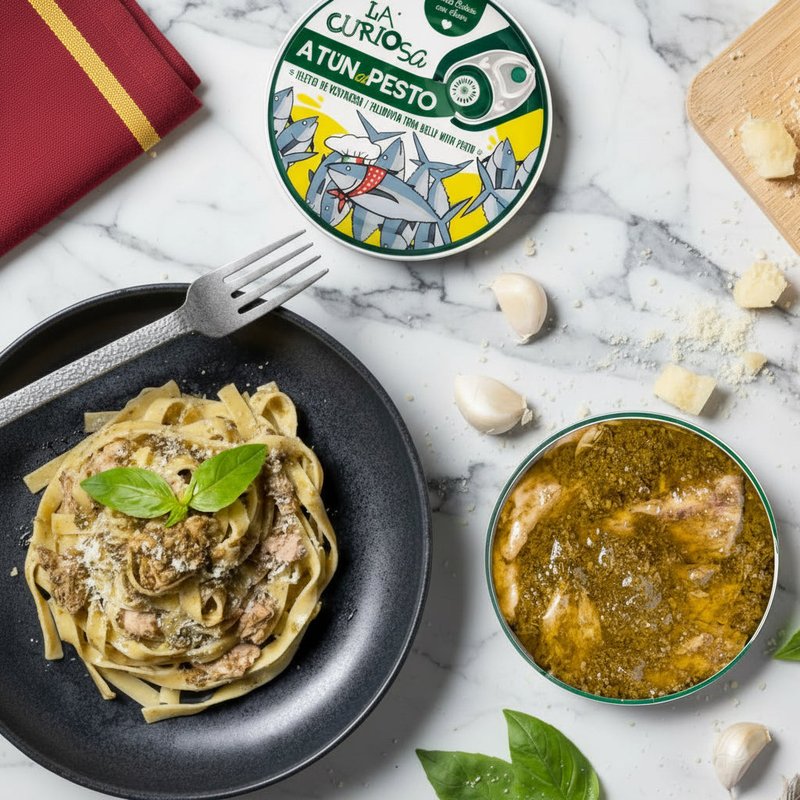
There are three doors in to this world. Octopus, or pulpo, is the gateway: a tin of it in olive oil makes pulpo a la gallega in under a minute. Open the tin, slice a warm boiled potato, pile the octopus on top, spoon over the oil from the tin, dust with smoked paprika. That is the whole dish, and it is genuinely good. Conservas de Cambados, Ramón Peña, and Ati Manel all make reliable tins. Squid and cuttlefish are the ones that scare people, which is a pity, because they are the most fun tins to open. Chipirones are baby squid, often whole and tender, essentially a ready-made pintxo. The dramatic version is en su tinta, in its own ink, a jet-black sauce of ink, tomato, and onion that looks alarming and tastes rich, briny, faintly sweet. Tip a tin over white rice, squeeze a lemon and watch the rice go black. Ramón Peña and Donostia Foods are good choices, and if the ink is a step too far, chipirones in plain oil are the more gentle way in.

The sardine and the tuna earned their place in the can by sheer abundance. The octopus earned it the hard way, dismissed for centuries, preserved by people who had nothing better, and in the end revealed to be one of the best things on the shelf. It is still the tin most people skip. It should be the one you reach for.
The Database
Here is what happened this week.
102
NEW PRODUCTS
49
RESTOCKED
8
PRICE CHANGES
62
SOLD OUT
2
NEW BRANDS
1
NEW RETAILERS
Figures captured at publication. The market is live and always shifting at mrtinned.com.
The headline arrival this week is ScandiKitchen, the first dedicated Nordic specialist in the catalog, plus two new brands, Feldts and Glyngøre. A deep cleanup of the brand records: a brand-resolution bug was traced to its root and fixed, mislabeled products were reassigned to their correct makers, and a long tangle of duplicate entries was consolidated.
The Move
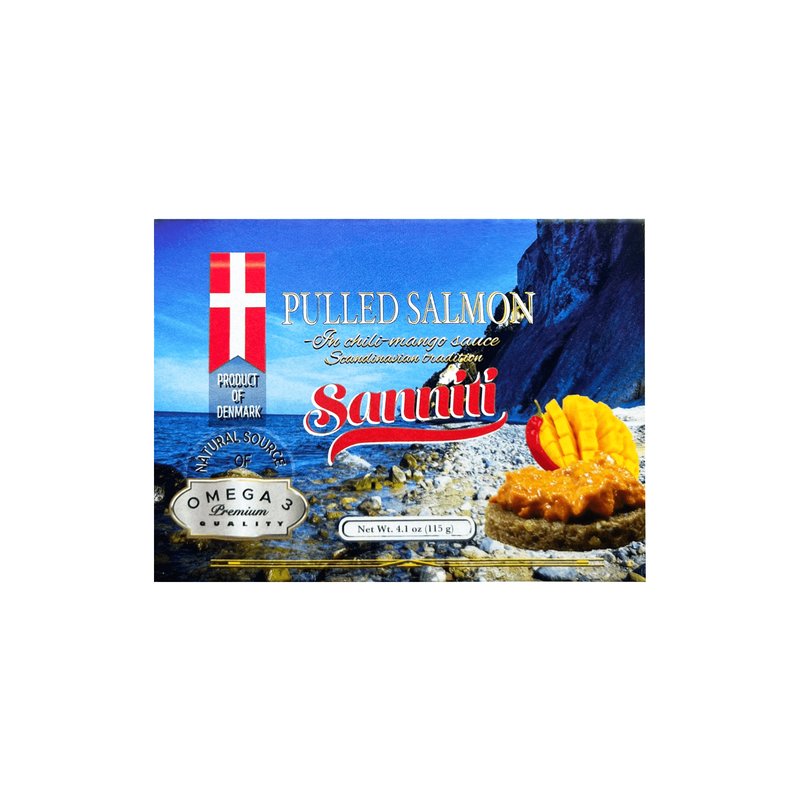
Supermarket Italy cuts Sanniti pulled salmon to under two dollars.
Sanniti's pulled salmon in chili mango sauce has dropped to $1.99 at Supermarket Italy, down from $4.25, and held there every day since June 12. It is not a tasting tin: soft flakes of salmon in a sweet, gently hot mango sauce, built for a bowl rather than a board. Spoon it over rice with lime and cucumber, or onto toast, and you have a five-minute lunch for the price of a coffee. The retailer tags it 55% off its own list price; by our tracking the working drop is from $4.25.
$1.99
$4.25
53% OFF
Buy now →
The Tin
Smoked Geoduck
Smoked Geoduck
WILDFISH CANNERY · ALASKA · CAPUTO'S

The strangest clam in the sea, smoked and sealed.

The geoduck is the largest burrowing clam in the world, and one of the longest-lived animals on earth: the typical lifespan runs to about 140 years, and the oldest on record passed 160. It does not look like a clam. Its two small shells cannot contain it, so a long fleshy siphon protrudes permanently, while the body sits buried up to a metre down in Pacific mud, the siphon alone reaching three feet. The Pacific Northwest, from Alaska to Baja, has eaten it for as long as anyone has lived there. Most of the world has never seen one.

Wildfish Cannery, working out of Klawock in southeast Alaska, is the rare house that puts it in a tin. The geoduck is cleaned, smoked, and sealed in a limited run that comes and goes. What you get is sweeter and firmer than a soft-shell clam, the texture closer to abalone or a good squid than to the steamers most people know, a clean woodsmoke note over deep marine sweetness. It is a tin you reach for when the usual sardines and mussels feel too familiar.

$22.99 at Caputo's.

Buy now →
What are you opening this week? Tell us →
The Deal
Caputo's holds Güeyu Mar sea cucumber at a fifth off.
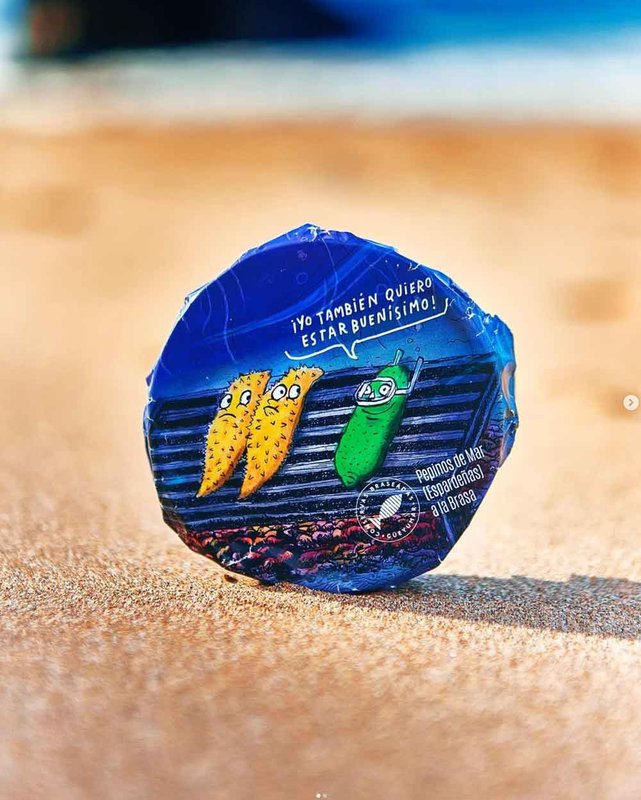
Güeyu Mar's chargrilled espardena has sat at $63.99 at Caputo's since early May, 20% under its $79.99 list, and it is one of the rarest tins we track. Espardena is sea cucumber, and Güeyu Mar works only with the prized inner muscle, grilling each piece over hardwood embers at chef Abel Álvarez's Asturian asador before sealing it in Arbequina olive oil. The result is clean, lightly smoky, and tender rather than slippery, a flavor tasters put somewhere between crab and clam. Not a beginner's tin, and not cheap even discounted. A fifth off something this scarce is the moment to try it, ideally with a fried egg or warm potatoes and the tin oil whisked into a quick pil pil.
$63.99
$79.99
20% OFF
Buy now →
The Find
“Anyone tried smoked mackerel?”
Not a tin this week, but worth the detour. Someone on r/CannedSardines posted a photo of whole cold- and hot-smoked mackerel in vacuum packs at an Eastern European market, noting they looked cheaper than most tins, over a pound of fish for only ten or twelve dollars. The thread that followed was a small masterclass in how to eat them. The recurring answer was the Eastern European spread: the smoked fish picked apart and served charcuterie-style with boiled potatoes, raw onion, something pickled, and often something sweet like apple to cut the oil. Several commenters warned how intensely oily these are, one recommends gloves and cling-film on the cutting board, and a useful distinction surfaced: the cold-smoked version is technically raw, closer to cured sashimi, while the hot-smoked is firmer and flakier. A good reminder that the tin is not the only way into smoked mackerel, nor the cheapest.
Read the thread →
The Close
Next week: salt and time. The fish that fed armies and crossed oceans, dried hard as a board and soaked back to life over days. The most preserved fish in history.
Was this issue useful?
Yes → No →
This newsletter is new and growing entirely by word of mouth. If you found it useful, forwarding it to a friend or discussing it on Reddit means more than you might think.

~ Alex
MrTinned / AllTinned Unsubscribe · View in browser
© 2026 MrTinned. All rights reserved.
PO Box 2941, Winnetka, CA 91396, US
You are receiving this because you subscribed at alltinned.com or mrtinned.com.