|
MrTinned Report
| Issue 9 |
Saturday, 11 July 2026 |
Weekly |
Forwarded by a friend? The weekly report is free. Get your own → |
|
|
The Open
|
Glass
and the vanishing fish
|
You almost certainly have never eaten the eel you think you ate. Before it is unagi over rice or angulas in a clay dish, the eel reaches the coast as a splinter of glass, a transparent thread a few centimeters long with barely an eye to it, drifting in from the open ocean on currents it does not choose and traveling thousands of miles to get there. It arrives, in a sense, blank. And almost everything that happens to it after is a matter of one thing being sold as another. Eel is the fish of disguise. Start with the farm, because there has never been one. Up until a laboratory in Japan closed the cycle for the first time this past May, no one had ever bred an eel in captivity from egg to egg. The European eel spawns somewhere in the Sargasso Sea, a patch of the mid-Atlantic no one has ever actually watched it use, and it drifts back toward Europe on the Gulf Stream over a year or more, going to glass as it reaches fresh water, then yellow as it climbs the rivers, living years or decades before turning silver and swimming back across the ocean to spawn once and die. What the trade calls farmed eel is simply glass eels netted from that journey and then fattened in tanks. The farm was always just a slower kind of fishing wearing a farm name. That fiction matters now because the animal is vanishing. The European eel has fallen more than ninety percent since the 1970s, it is listed critically endangered, sits on Appendix II of the CITES treaty, and has been banned from export out of the European Union since 2010. None of this has stopped the trade. Europol puts the illegal glass-eel traffic at up to three billion euros in a peak year, one of the most lucrative wildlife crimes on earth, and in 2023 alone European authorities seized more than a million live eels. They move from a few Atlantic rivers, Portugal allows the catch only on the Minho, where the records get inflated to launder eels taken elsewhere, out to farms in China, Taiwan and Japan, where a critically endangered European fish is raised, grilled, and sold to you as Japanese unagi, even though Japan's own eel is endangered and its farms run on the same wild-caught glass. The eel on the Tokyo plate is very often not Japanese at all. The disguise runs the other way at the luxury end. In the Basque country the glass eels themselves, angulas, are the caviar of the north, eaten at Christmas and on the feast of San Sebastián, they can run to five hundred dollars per pound. A fish once so common that it was fed to pigs is now guarded like a jewel. So dear, in fact, that in 1991 a Spanish company invented gulas, little threads of pollock surimi pressed and striped to look the part, so the tradition could survive without the hefty bill. Most of the baby eels in most of the Christmas dishes in Spain today are pollock doing an impression of an eel. Which is the long way around to the eel in this week's tin, and to why it is the honest one. It is not Anguilla. The everyday canned eel of Taiwan and much of Asia is conger, a different family altogether, abundant and unthreatened, roasted and sealed in a sweet, spiced sauce and eaten over rice for a couple of dollars. It does not pretend to be a rarer fish, or a legal one, or a Japanese one, or a fish at all when it is really pollock. It is exactly what the label says: cheap, plain, and in no trouble. In a fish defined end to end by one thing standing in for another, the five-dollar tin is the only eel telling the truth.
|
|
|
House pick
|
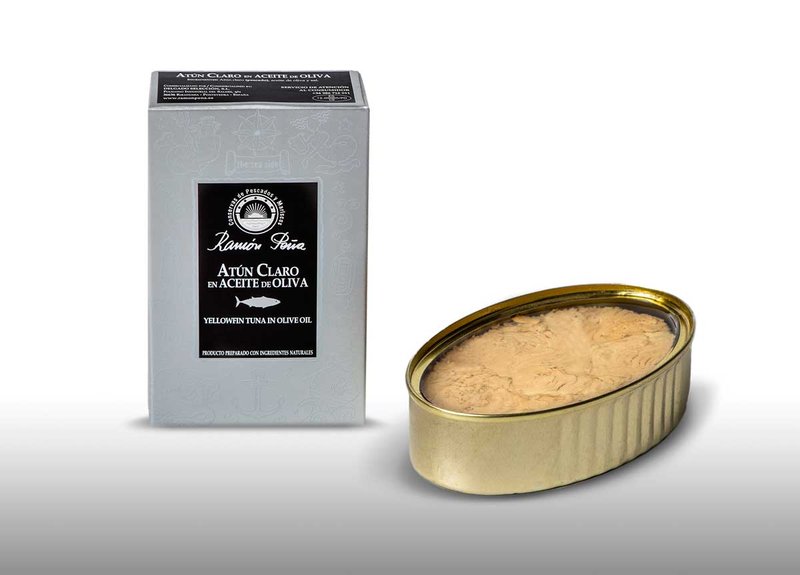
Yellowfin Tuna in Olive Oil, Silver Line
At Caputo's: The Salt Lake institution that runs conservas dinners, with free US shipping on tins over $30.
Visit store →
|
|
|
|
|
The Database
Here is what happened this week.
|
109
NEW PRODUCTS
|
38
RESTOCKED
|
6
PRICE CHANGES
|
|
25
SOLD OUT
|
0
NEW BRANDS
|
1
NEW RETAILERS
|
Figures captured at publication. The market is live and always shifting at mrtinned.com. The busiest week for new tins in a while, and almost all of it from Europe. Luisa Paixao Europe joined the tracker after the brand's American site stepped away from canned fish. A rebuilt feed brought Conserverie Courtin back online after it overhauled its whole website. The reconciliation pass cleared out fifty-odd listings that had quietly fallen out of their shops while still showing in stock. No new brands this week.
|
|
|
The Move

|
Wildfish smoked king salmon falls to $14 at Zingerman's.
Wildfish Cannery smokes and cans wild Alaskan salmon in Klawock, a town of under eight hundred on Prince of Wales Island that held Alaska's very first salmon cannery back in 1878. It is a true craft operation, no co-packers, the fish bought straight from local fishermen and cooked in small batches, and its alderwood-smoked king, the richest and most buttery of the Pacific salmon, is the tin Wirecutter named the best canned salmon in the country. Zingerman's has knocked it from $24 to $14 in a summer clearance, a real forty-two percent off. Eat it as it is, on a cracker or straight from the tin, and let the smoke and the fat do the work.
$14.00
$24.00
42% OFF
Buy now →Price history and watch →
|
|
|
|
The Tin
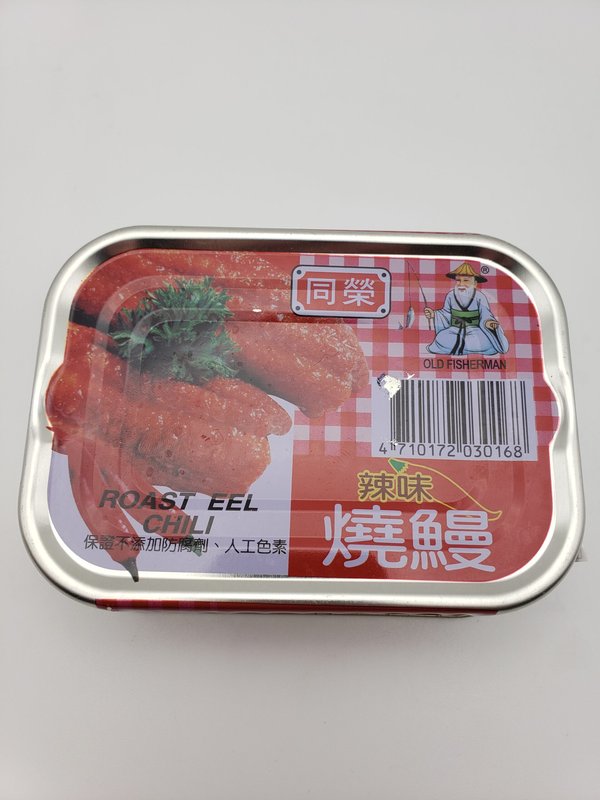
Roast Eel with Chili
OLD FISHERMAN · TONG YENG · TAIWAN · RTG.FISH
The eel Taiwan actually eats. While Europe fights over glass eels worth five hundred dollars a pound, Taiwan has been quietly eating a different eel for generations. Old Fisherman, made by Tong Yeng, is roughly what canned tuna is to America: a pantry fixture, not a delicacy. This is a genuinely beloved everyday food, not a novelty. The eel inside is conger, the abundant and unthreatened cousin of the endangered Anguilla, roasted and packed in a dark, sweet sauce of soy and sugar with cinnamon, pepper, and enough chili for a low, warming burn. The flesh comes out soft and a little crumbly, closer to pork floss than to a fillet, and the sauce gives it a deep savory weight. It is rich and salty and built to be eaten with something plain. You can eat it straight from the can at room temperature, and plenty of people do, but it becomes a real meal when warmed and spooned over hot white rice, or stirred through a bowl of morning congee where the crumbly meat belongs. It is the argument of this week's essay sitting in a can. In a fish the rest of the world has priced into crisis and wrapped in disguises, here is the eel that is cheap, honest, in no trouble, and genuinely loved, for the price of a coffee. $5.00 at RTG.fish. |
What are you opening this week? Tell us → |
|
|
The Deal
|
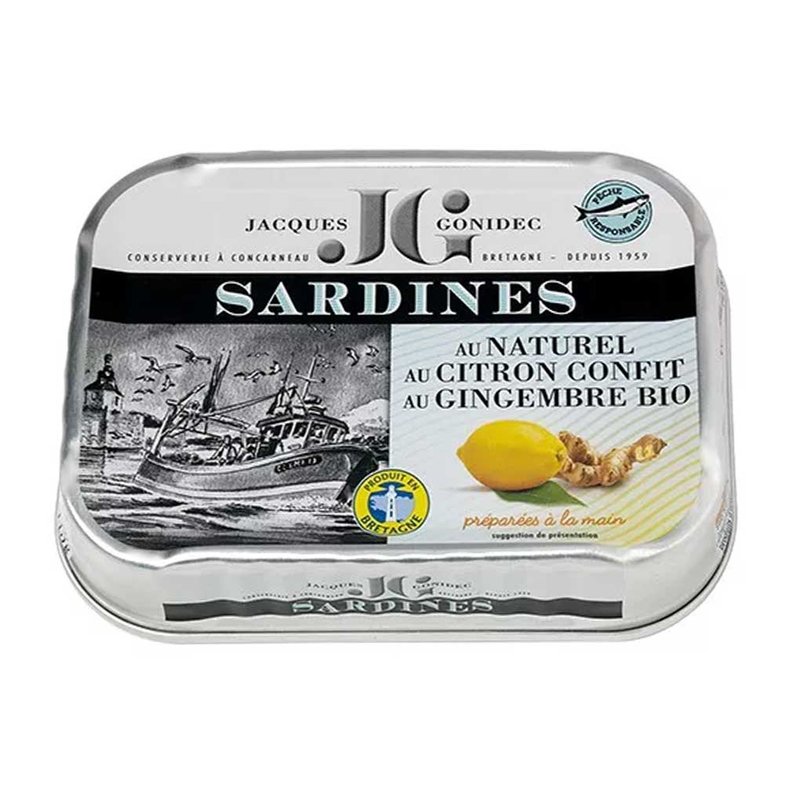
Yummy Bazaar takes 30% off a Breton sardine with candied lemon.
Conserverie Gonidec has been canning in Concarneau since 1959, and it is the last house in that Breton port still doing it the old way: fish landed off the Brittany coast, cleaned and sorted by hand, fried and packed by hand, sold under its premium label Les Mouettes d'Arvor. This is one of its odder and better ideas, an organic sardine dressed with candied lemon and ginger, the sweetness and the citrus playing against the oily fish rather than hiding it. Yummy Bazaar has it at a real thirty percent off. Eat it on bread, cold, and let the lemon do the talking.
$6.99
$9.99
30% OFF
Buy now →Price history and watch →
|
|
|
|
The Find
“I feel so vindicated re:fishwife.”
A good argument on r/CannedSardines this week. The poster came up on the accessible tins, King Oscar, Nuri, Bela, thought five dollars a can was already a splurge, and then watched Fishwife arrive with its bright maximalist packaging and its fifteen-dollar price, and admitted to a small thrill on finding that cheaper tins held their own. The thread turned into the long standing argument the whole hobby keeps having: how much of the price is the fish and how much is the label. The useful voices pointed out that in Spain most conservas are priced reasonably, the eye-watering ones tend to be Galician or high-grade shellfish, and that some celebrated American brands are slapping their name on someone else's fish. Others made the fair counterpoint that a heavily smoked, skinless trout is simply a different product from a lightly smoked one, not a worse deal. The takeaway is the one this newsletter keeps landing on: read the fish, not the flag.
Read the thread →
|
|
|
The Radar
The Spanish Table goes dark.
After nearly thirty years, the Iberian grocer that helped put conservas on American shelves has effectively wound down. Its Berkeley store closed in August 2025, blaming the fifteen percent United States tariff on European goods, which it said had pushed its prices up by about a third. The San Francisco shop has been shuttered since November amid an eviction, its space now becoming a different store this autumn, and their surviving online shop is now offline. We had to deactivate its 231 listings. The tariff is not closing every door on its own, but it is starting to decide which importers of European food can survive, and that is worth watching.
Visit →
|
|
|
The Close
Next week: the single most expensive thing in the aisle, a cut so prized that one small tin could cost what a whole case of sardines does.
|
|
|
Was this issue useful?
Yes →
No →
|
|
|
Writing about tinned fish? Our data is quotable with attribution. Reply to this email.
© 2026 MrTinned. All rights reserved.
PO Box 2941, Winnetka, CA 91396, US
|
|